
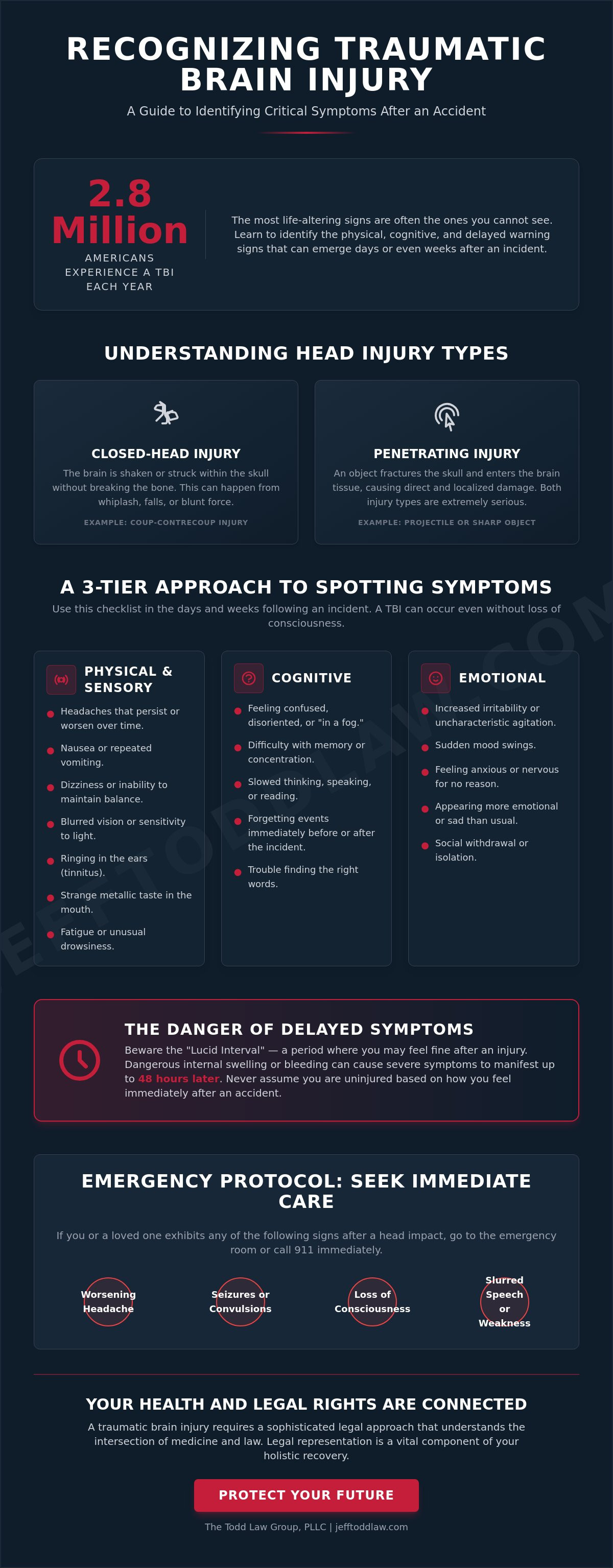
An estimated 2.8 million Americans experience a traumatic brain injury each year, but the most life-altering signs are often the ones you cannot see. It's common to feel a sense of paralyzing uncertainty after a car accident or a fall. You might find yourself questioning whether a persistent dull ache is a temporary nuisance or a critical symptom of head injury that demands emergency care. This confusion is valid, especially since the 2026 Brain Trauma Foundation guidelines highlight how complex these injuries can be, even when they don't involve a visible wound.
We're here to provide the steady reassurance you need during this stressful time. In this guide, you'll learn to identify the physical, cognitive, and delayed warning signs that often emerge days or even weeks after an incident. We'll provide a clear checklist for monitoring your recovery and help you understand when a medical oversight transitions from a health concern into a legal issue. By the end, you'll have a professional roadmap for your medical and legal next steps, ensuring your path to restoration is both clear and protected.
Key Takeaways
- Learn the critical differences between closed-head and penetrating injuries to better understand how various impacts disrupt brain function.
- Identify every physical, cognitive, and sensory symptom of head injury using a specialized three-tier approach that accounts for even subtle changes.
- Recognize the dangers of the "lucid interval" and how delayed internal swelling can cause severe symptoms to manifest up to 48 hours later.
- Use our emergency protocol checklist to determine when specific neurological signs require immediate medical intervention or surgical care.
- Discover how legal representation serves as a vital component of your holistic recovery by managing the high-stakes complexities of your injury claim.
Understanding Traumatic Brain Injury: More Than Just a Bump
A head injury is rarely just a superficial wound. When medical professionals discuss a Traumatic Brain Injury, they are referring to a complex disruption in normal brain function caused by an external force. This disruption can alter everything from your cognitive processing to your emotional stability. It is vital to recognize that an injury doesn't need to be visible to be devastating. Many survivors struggle with a "silent" symptom of head injury that doesn't appear on the skin but fundamentally changes their quality of life. Even a diagnosis of a "mild" concussion is technically a brain injury that demands professional monitoring and a careful return to daily activities.
TBIs generally fall into two categories. A closed-head injury occurs when the brain is shaken or struck within the skull without breaking the bone. In contrast, an open or penetrating injury involves an object fracturing the skull and entering the brain tissue. Both types are serious. One specific danger in high-impact events is the coup-contrecoup mechanism. This happens when the force of an impact causes the brain to strike one side of the skull and then rebound to hit the opposite side. This results in dual sites of injury; it often complicates the recovery process and the legal strategy required for your total restoration.
Common Types of Head Trauma
Understanding the specific nature of your injury is the first step toward healing. While every case is unique, most trauma falls into these three classifications:
- Concussions: These are the most frequent form of TBI. Despite being labeled as "mild," they are physiological injuries that often go undetected in initial emergency room screenings if the right protocols aren't followed.
- Contusions: This is a physical bruising of the brain tissue. Just like a bruise on your arm, it involves leaking blood vessels. However, within the confined space of the skull, this can lead to dangerous pressure.
- Hematomas: These are life-threatening blood clots that form between the brain and the skull. They often require immediate surgical intervention to prevent permanent damage or death.
Why Impact Velocity Matters in Texas Accidents
The severity of a brain injury is often dictated by the physics of the accident. On Houston highways like I-10 or the 610 Loop, high-speed collisions are unfortunately common. The velocity involved in these crashes significantly increases the risk of severe TBI. You don't even have to hit your head to suffer a traumatic injury. The violent motion of whiplash can cause the brain to collide with the interior of the skull, leading to significant internal damage. If you've been involved in a high-speed collision, consulting a Houston car accident lawyer is a critical step in ensuring your medical needs are documented and your future is protected. These incidents require a sophisticated legal approach that understands the intersection of physics and neurology.
Recognizing Every Symptom of Head Injury: A 3-Tier Approach
Identifying a traumatic brain injury requires looking past the surface. Many people mistakenly believe that if they didn't lose consciousness, they didn't suffer a serious injury. This is a dangerous misconception. Medical data confirms that a significant symptom of head injury can occur while the victim remains fully awake. To help you monitor your recovery or that of a loved one, we categorize these warning signs into three distinct tiers: physical, cognitive, and emotional. Use this list as a daily checklist during the weeks following an incident.
Physical and Sensory Red Flags
Physical symptoms are often the most immediate indicators of trauma. You should pay close attention to headaches that do not go away with rest. If a headache intensifies over several days, it may signal increasing intracranial pressure. Other red flags include persistent nausea, repeated vomiting, or a sudden inability to maintain balance. Sensory changes are equally telling. You might experience blurred vision, a constant ringing in the ears, or a strange metallic taste in your mouth. These sensory disruptions indicate that the brain is struggling to process external stimuli correctly. If you've been involved in a motorcycle accident or a fall, don't dismiss these signs as simple stress.
Cognitive and Emotional Changes
Cognitive shifts can be subtle but are often the most disruptive to your daily life. You might feel a sense of "brain fog" or feel significantly slowed down during normal conversations. Recognizing a cognitive symptom of head injury, such as a localized memory gap, is just as important as identifying physical pain. Many victims cannot recall the specific moments leading up to a car or truck accident. Emotionally, a brain injury can cause profound personality shifts. If you find yourself becoming suddenly irritable, anxious, or depressed without an obvious cause, your brain may be struggling to regulate your mood following the impact.
It's vital to remember that these signs manifest differently across age groups. While an adult might describe feeling "foggy," a young child might simply become inconsolable, change their sleep patterns, or lose interest in their favorite toys. If you notice these changes in yourself or a family member after a collision, taking swift action is essential for both your health and your potential legal claim. Securing a steadfast legal partner ensures that your medical documentation accurately reflects these life-altering changes, allowing you to focus entirely on your restoration.
The Danger of Delayed Symptoms and the 'Lucid Interval'
The immediate aftermath of a collision is often defined by chaos and adrenaline. You might stand up, speak clearly, and believe you've escaped harm. This period of apparent stability is known as a "lucid interval." It is a deceptive phase where a person seems fine even while internal bleeding or swelling is beginning to occur. The Danger of Delayed Symptoms lies in this false sense of security. Within 24 to 48 hours, internal swelling, or edema, can create intense pressure within the skull. This leads to a rapid neurological decline that can be fatal if not caught in time.
Because of this delay, the first 72 hours following any significant impact are the most critical. During this window, you must be vigilant for any emerging symptom of head injury. This is also why "Second Impact Syndrome" is so catastrophic. If you sustain a second bump to the head before the first injury has healed, the brain can swell uncontrollably. This often results in permanent disability or death. Staying still and seeking a professional evaluation is the only way to ensure your brain has the environment it needs to recover.
When 'Feeling Fine' Is Deceptive
In a high-stress Texas truck wreck, your body's natural adrenaline response can mask severe pain. You might feel "fine" at the scene and refuse a medical evaluation. This is a significant risk. You should always accept an assessment from first responders. By the second or third day, the adrenaline wears off and the true extent of the trauma reveals itself. Watch for increasing drowsiness, persistent vomiting, or one pupil appearing larger than the other. These are clear signs that the initial "lucid" period has ended and a medical crisis is unfolding.
Misdiagnosis at the Hospital: A Legal Perspective
Sometimes, the failure to identify an injury isn't the patient's fault. If you visit one of the many Houston hospitals, you expect a specific standard of care. This includes ordering necessary CT scans or MRIs when a patient presents with head trauma. If an emergency room physician dismisses your concerns and fails to follow established protocols, they may be committing medical malpractice. A missed diagnosis of a brain bleed is a grave error. In Texas, healthcare providers have a legal obligation to provide care that meets professional standards. When they fail, and a treatable symptom of head injury becomes a permanent impairment, legal intervention is necessary to ensure your total restoration and hold the negligent parties accountable.
Emergency Protocol: When to Seek Immediate Care
If you or a loved one sustains a head impact, the most dangerous advice you can follow is to "just go home and sleep it off." While rest is a vital component of recovery, unmonitored sleep during the first 24 hours can be a fatal mistake. A person may appear to be sleeping soundly when they are actually slipping into a coma due to rising internal pressure. You must receive a professional medical clearance before allowing an injured person to sleep for extended periods without being checked every two hours. Recognizing a critical symptom of head injury in a sleeping patient requires checking for their ability to be easily roused and their awareness of their surroundings once they wake.
Immediate Danger Signs (Call 911)
Certain neurological indicators signal a surgical emergency that cannot wait for a scheduled doctor's visit. If any of the following occur, call 911 or go to the nearest Houston emergency room immediately:
- Seizures or convulsions: Any involuntary shaking or twitching, even if the person has no history of epilepsy.
- Repeated vomiting: Projectile vomiting or persistent nausea that does not subside after the initial impact.
- Anisocoria: A condition where one pupil appears significantly larger than the other, indicating brain compression.
- Slurred speech: An inability to form clear sentences or find common words during conversation.
- Hemiparesis: Sudden weakness or numbness in the arms or legs, specifically when it's localized on one side of the body.
These signs often indicate that the brain is being compressed by blood or fluid. This requires immediate intervention to prevent permanent cognitive impairment or death. Choosing to act quickly can be the difference between a full recovery and a lifelong disability.
Documenting for Your Future Recovery
Your medical records serve as the foundation for both your physical healing and any future legal claim. When you arrive at the emergency room, you must be explicit about the cause of the injury. Tell the staff if the impact resulted from a high-speed truck accident or a workplace fall. This specific information helps doctors look for trauma patterns that generic screenings might miss. Always request a physical copy or digital access to all imaging results, such as CT scans or MRIs, before leaving the facility.
Maintaining a detailed symptom journal is a powerful tool for your recovery. Record the date and time of every symptom of head injury you experience, including "brain fog," light sensitivity, or sudden mood swings. This log provides your medical team with a clear timeline of your progression and ensures that no detail is lost to memory gaps. If you're struggling to manage the aftermath of an accident, reaching out to a dedicated personal injury specialist can provide the legal stability you need to focus entirely on your medical restoration.
From Diagnosis to Recovery: How The Todd Law Group, PLLC Protects You
Recovery from a traumatic brain injury is a journey that extends far beyond the hospital walls. At The Todd Law Group, PLLC, we view legal representation as a vital component of your holistic healing process. It isn't just about a financial transaction; it's about securing the resources you need for total restoration. Jeff Todd brings a prestigious professional history to your case, having transitioned from elite corporate legal hubs to dedicated personal advocacy for injured Texans. This high-caliber background ensures that your case is handled with the intellectual rigor typically reserved for corporate giants, but with a focus entirely on your individual recovery.
If you're struggling with a lingering symptom of head injury, the stress of mounting medical bills and lost wages can stall your physical progress. We operate on a commitment where you pay no fee unless we win your case. This structure is designed to alleviate your immediate financial burden. It allows you to focus on your rehabilitation while we handle the meticulous details of your litigation. Our firm is battle-tested in Texas courtrooms and understands how to translate your medical trauma into a compelling legal narrative that prioritizes your future stability.
The True Cost of a Head Injury
The financial impact of a brain injury is rarely limited to the initial ER visit. We work to calculate the true cost of your injury, which often includes years of speech therapy, occupational therapy, and specialized cognitive rehabilitation. Beyond the tangible bills, we address "invisible" damages. These include the loss of enjoyment of life and the profound strain an injury places on family relationships. If you've been hurt due to someone else's negligence, understanding your rights is the first step. You can learn more by visiting our Houston personal injury lawyer guide to see how we navigate the road to recovery for our clients.
Why Experience Matters in Brain Injury Cases
Proving a cognitive or emotional symptom of head injury to a Texas jury presents unique challenges. Unlike a broken bone, brain damage doesn't always show up clearly on a standard X-ray. It requires a sophisticated approach that combines medical science with aggressive advocacy. Jeff Todd coordinates with world-class expert medical witnesses to build a comprehensive picture of your impairment. We ensure that the full extent of your "invisible" injuries is documented and defended with the speed and attention to detail your case deserves. Don't leave your restoration to chance. Schedule your free consultation with Jeff Todd today to start your path toward a full legal and physical recovery.
Securing Your Path to Full Restoration
Your health and legal rights are deeply interconnected following a traumatic event. By understanding the 72-hour critical window and the deceptive nature of the "lucid interval," you've already taken a major step toward protecting your well-being. Vigilance remains your best defense. If you identify any new or worsening symptom of head injury, you must prioritize medical intervention and thorough documentation. This proactive approach ensures that your medical history accurately reflects the challenges you face, providing a stable foundation for your recovery.
Navigating the complexities of a brain injury claim requires a partner who combines elite corporate rigor with compassionate local advocacy. Attorney Jeff Todd has been licensed in Texas since 1994 and applies his history as a high-stakes litigator to secure the resources you need for long-term rehabilitation. Our firm operates on a contingency-based model; you pay nothing unless we win your case. Protect your health and your future; contact Jeff Todd for a free case evaluation today. You don't have to face this journey alone; we're here to help you move forward with confidence and peace of mind.
Frequently Asked Questions
Can you have a brain injury even if you didn't lose consciousness?
Yes, you can sustain a significant brain injury without ever losing consciousness. Medical professionals often classify concussions as mild traumatic brain injuries even if the victim remained awake throughout the entire event. You should never use a lack of a "blackout" as a reason to skip a medical evaluation. If you feel dazed, disoriented, or simply "off" after an impact, your brain has likely suffered a physiological disruption that requires professional monitoring.
How long do concussion symptoms usually last?
Concussion recovery timelines vary significantly based on the individual and the severity of the impact. While many patients see symptoms resolve within seven to ten days, others experience issues for several months. Updated 2025 clinical guidelines recommend a brief period of relative rest for up to two days. After this, you should begin a gradual return to activities as your symptoms permit. Persistent issues should always be discussed with a specialized neurologist.
What is the difference between a mild TBI and a severe TBI?
The distinction between mild and severe TBI is primarily based on the duration of unconsciousness and the results of initial neurological screenings. A mild TBI might involve no loss of consciousness or a very brief period of confusion. A severe TBI often involves an extended period of unconsciousness or a coma. Regardless of the clinical label, any disruption in brain function is a serious medical event that can have lasting consequences on your daily life.
When is a headache after a car accident considered an emergency?
A headache is a common symptom of head injury, but it becomes an emergency if it intensifies rather than dissipating with rest. If your headache is accompanied by repeated vomiting, weakness on one side of your body, or a sudden change in vision, seek immediate care at a Houston emergency room. These signs often indicate rising intracranial pressure or a brain bleed that requires urgent surgical intervention to prevent permanent damage or death.
Can a head injury cause permanent personality changes?
Yes, traumatic brain injuries frequently cause permanent shifts in personality and emotional regulation. This often occurs when the frontal lobe, which controls impulses and social behavior, is damaged during an impact. You or your family might notice increased irritability, sudden anxiety, or a lack of emotional control that seems entirely out of character. These "invisible" changes are just as significant as physical limitations and require specialized long-term care and dedicated legal advocacy.
Is a hospital liable if they sent me home and my head injury got worse?
A hospital may be held liable through a medical malpractice claim if their failure to diagnose your injury violated the accepted standard of care. If a doctor sends you home without performing necessary imaging like a CT scan, and your condition subsequently deteriorates, they may have been negligent. Proving these cases in Texas requires a sophisticated legal approach that demonstrates how the provider's oversight directly led to your worsening health or permanent impairment.
How much is a brain injury settlement worth in Texas?
Settlement values for brain injuries in Texas are determined by the specific economic and non-economic damages involved in your case. These factors include the cost of your past and future medical treatment, the total amount of your lost wages, and the long-term impact on your quality of life. Because every injury is unique, there is no "average" settlement. A thorough legal analysis is necessary to calculate the full scope of your future needs.
Do I need a lawyer if the insurance company offered a settlement for my concussion?
Consulting a lawyer is highly recommended before accepting any insurance offer for a concussion. Insurance companies often propose quick settlements before the full extent of a brain injury is known. Since symptoms can be delayed or become chronic, an early settlement might not cover the true cost of your future care. A dedicated advocate ensures that any agreement accounts for your total restoration, rather than just your immediate emergency room bills.


