

Did you know that while Houston Methodist earned the #1 spot in Texas for 2026, other facilities like HCA Houston Healthcare Conroe actually rank in the top 5% nationally for patient safety? Choosing the right facility among the massive landscape of houston hospitals can feel like an impossible task when you're already dealing with the stress of an injury or illness. You want the best care possible, but the sheer size of the Texas Medical Center often creates more confusion than clarity.
At The Todd Law Group, PLLC, we believe your road to recovery should be paved with transparency and high-caliber medical expertise. This guide provides a clear, data-driven comparison of Houston’s top medical systems to ensure you find the right specialty care for your family's needs. We'll examine the Spring 2026 Leapfrog safety grades, identify which systems excel in specific medical fields, and show you exactly how to verify hospital safety ratings so you can make an informed decision for your health. If care doesn't meet these standards, you'll also know the essential steps to protect your family's rights and well-being.
Key Takeaways
- Learn to navigate the Texas Medical Center by understanding when to choose an academic research hospital versus a local community facility.
- Identify which of the "Big Three" systems leads in your specific medical needs, whether you require advanced neurology care or emergency trauma services.
- Master the use of Leapfrog and CMS safety ratings to objectively compare houston hospitals and avoid preventable medical errors.
- Discover the specialized regional hubs that offer world-class treatment for complex oncology and pediatric cases.
- Understand your legal rights under Texas law if a medical provider fails to meet the standard of care during your recovery.
Navigating the Houston Healthcare Landscape in 2026
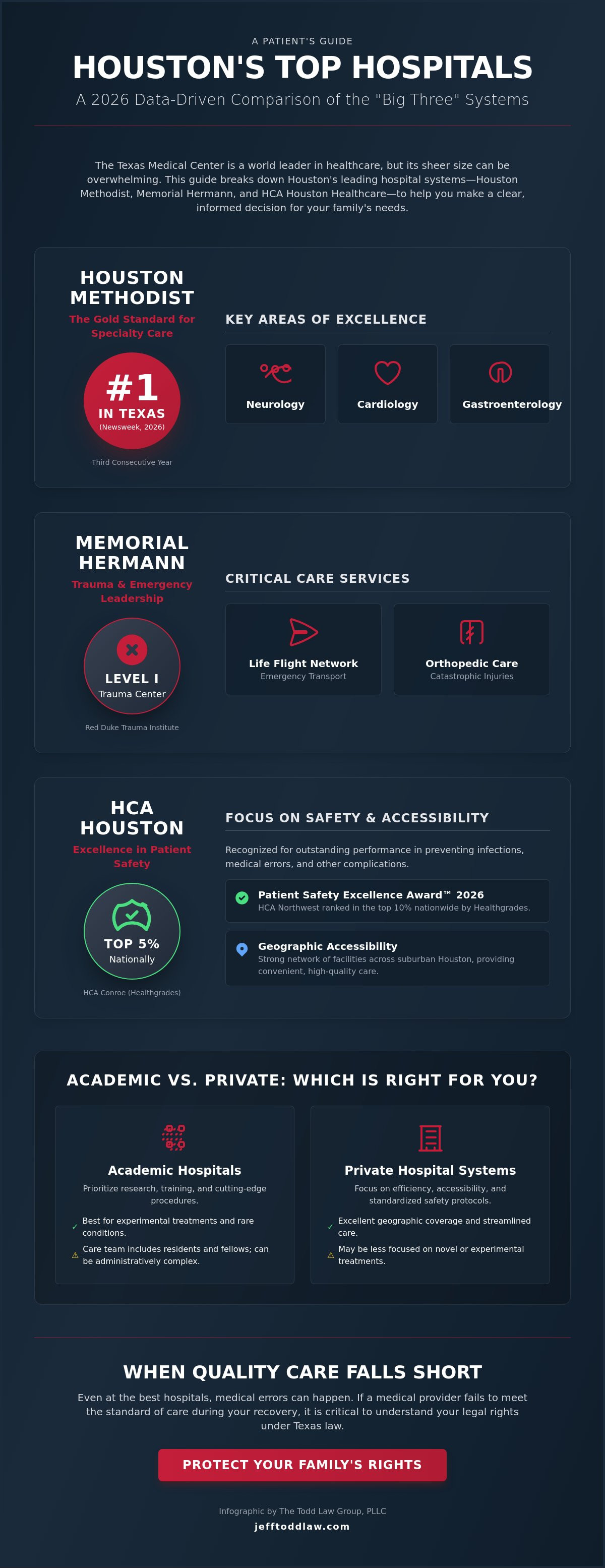
Houston's medical infrastructure is a global beacon for complex care. Patients arrive from every continent to access the specialized expertise found within houston hospitals. This massive network creates a high standard for medical practice, but the sheer scale can be overwhelming for families focused on the road to recovery. The sector is the primary driver of regional growth, with healthcare predicted to add 14,000 new jobs in 2026 alone. This expansion is led by the "Big Three" systems: Houston Methodist, Memorial Hermann, and HCA Houston Healthcare. In 2026, Newsweek ranked Houston Methodist as the #1 hospital in Texas for the third consecutive year. Meanwhile, HCA Houston Healthcare Conroe earned a spot in the top 5% nationally for patient safety according to Healthgrades.
The Texas Medical Center (TMC) Advantage
The Texas Medical Center serves as the anchor of this region. It's a cluster of more than 50 non-profit institutions located in south-central Houston. This density of expertise means that if you suffer from a rare condition or a catastrophic injury, you're within blocks of the world's leading specialists. This environment fosters innovation, but it also creates logistical hurdles. Navigating this campus requires preparation. Parking garages like TMC Garage 4 or 10 fill quickly; many patients prefer using the METRORail Red Line to avoid the gridlock. While the concentration of talent is a benefit, the administrative complexity of these massive institutions can sometimes lead to communication breakdowns. If a hand-off between departments is handled poorly, the patient often pays the price through delayed or incorrect treatment.
Academic vs. Private Hospital Systems
Understanding the difference between hospital types is essential for your care strategy. Academic institutions, such as those affiliated with Baylor College of Medicine or UTHealth, prioritize research and training. These are the best choices for experimental treatments or highly specialized surgeries. However, because they're teaching facilities, you'll likely interact with residents and fellows in addition to your primary attending physician. This can be a benefit or a drawback depending on your specific needs. Private networks like HCA Houston Healthcare often provide better geographic accessibility across the suburbs. These facilities focus on efficiency and have recently been recognized for their safety protocols. For example, HCA Houston Healthcare Northwest received the 2026 Patient Safety Excellence Award from Healthgrades. This puts them in the top 10% of hospitals nationwide. Choosing between these systems depends on whether you need the cutting-edge research of a university setting or the streamlined, safety-focused environment of a top-tier private facility. Regardless of the system you choose, verifying their current safety ratings is a critical step in ensuring your family's well-being.
Comparing the 'Big Three' Houston Hospital Systems
Choosing between the primary houston hospitals involves more than checking a map. Each major system has carved out a specific identity within the Texas Medical Center and the surrounding suburbs. While Houston Methodist leads in overall reputation, systems like Memorial Hermann and HCA Houston Healthcare offer specialized infrastructure that may be more appropriate for specific emergency or surgical needs. If you're currently on the road to recovery, understanding these distinctions helps ensure you're in the right hands.
Houston Methodist: The Gold Standard for Specialty Care
Houston Methodist currently stands as the premier choice for complex specialty care. For the third consecutive year, Newsweek ranked it the #1 hospital in Texas for 2026. This reputation is built on high implementation rates for Patient-Reported Outcome Measures and exceptional patient satisfaction scores. According to the U.S. News Best Hospitals in Houston report, Methodist excels particularly in neurology, cardiology, and gastroenterology. Their flagship location in the Medical Center is a massive research hub, but they've successfully exported this high standard of care to regional branches in Sugar Land, Willowbrook, and West Houston.
Memorial Hermann: Trauma and Emergency Leadership
Memorial Hermann is the region's undisputed leader in trauma and orthopedic care. The Red Duke Trauma Institute remains one of only two Level I trauma centers for adults in the city. This facility is the heart of the Life Flight network, which provides critical emergency transport across Southeast Texas. If you've suffered a catastrophic injury in a truck or car accident, this system's emergency infrastructure is often the first line of defense. They also house the Rockets Sports Medicine Institute, making them a top choice for complex orthopedic surgeries and physical rehabilitation. Their network is vast, ensuring that high-level emergency care is accessible well beyond the central city core.
HCA Houston Healthcare and St. Luke's Health round out the major providers. HCA is the largest private provider in the area, offering extensive suburban reach and a focus on measurable safety. HCA Houston Healthcare Conroe received the 2026 Patient Safety Excellence Award from Healthgrades, placing it in the top 5% of hospitals nationwide. St. Luke's Health remains a historic leader in cardiac care through its partnership with the Texas Heart Institute. If you feel your care at any of these facilities has fallen below established safety standards, consulting a medical malpractice attorney can provide the legal clarity you need to move forward. Each of these systems plays a vital role, but your choice should align with the specific medical expertise your recovery requires.
Evaluating Quality and Patient Safety Standards
While the prestige of the Texas Medical Center is undeniable, patients must look closer at the specific safety records of houston hospitals. A facility's reputation in research doesn't always guarantee a high standard of day-to-day patient safety. On your road to recovery, you need to verify that your chosen facility has the protocols in place to prevent medical errors, infections, and surgical complications. Brand names provide comfort, but data provides protection.
Experience matters in medicine. Statistics consistently show that hospitals with higher patient volumes for specific procedures often achieve better outcomes. Surgeons who perform a procedure 100 times a year typically have lower complication rates than those who only do it 10 times. When you're facing a complex surgery, don't be afraid to ask about the hospital's annual volume for that specific treatment. High-volume centers often have more refined protocols for post-operative care and emergency interventions.
Cleanliness and protocol adherence are also vital metrics that aren't always visible in a brochure. One way to gauge a facility's commitment to these standards is by monitoring hospital acquired infection lawsuits. High rates of infections like MRSA or C. diff often point to systemic failures in sterilization or nursing protocols. These legal filings serve as a public metric for how well a hospital protects its most vulnerable patients from preventable harm.
Third-Party Safety Metrics You Should Check
The Leapfrog Group released its Spring 2026 Hospital Safety Grades, providing a transparent look at local performance. These grades rank facilities from "A" to "F" based on their success in preventing accidents and injuries. For example, HCA Houston Healthcare Conroe has maintained its status in the top 5% of hospitals nationwide for three years running. You should also review the CMS star ratings. These federal scores provide a 1-to-5 star summary of hospital quality, focusing on mortality rates and safety of care. If a hospital falls below a three-star rating, it's worth investigating their specific safety lapses before scheduling a procedure.
The Importance of Patient Satisfaction Surveys
Nursing care is the backbone of patient safety. HCAHPS scores (Hospital Consumer Assessment of Healthcare Providers and Systems) reflect how patients perceive their care. Pay close attention to the "doctor communication" and "discharge information" categories. If a facility scores poorly here, it suggests that patients are leaving the hospital without a clear understanding of their recovery needs. High satisfaction scores often correlate with better clinical outcomes because engaged patients are more likely to follow post-operative instructions. If you don't feel heard during your stay, the risk of a medical error significantly increases.
Specialized Care and Regional Medical Hubs
While general houston hospitals provide excellent routine care, the city’s global reputation rests on its specialized medical hubs. These institutions focus on specific, complex pathologies that require a level of infrastructure and research depth not found in standard community facilities. For patients facing life-altering diagnoses, choosing a specialty-first facility is often the most critical step on their road to recovery. These centers don't just follow existing protocols; they're often the ones inventing them.
Oncology and Pediatric Excellence
MD Anderson Cancer Center remains the global leader in oncology. It's the primary destination for rare and complex cancer diagnoses because of its massive research budget and access to clinical trials that aren't available elsewhere. The system is currently expanding to increase accessibility, including the construction of a new campus in Sugar Land scheduled to open in 2029. This focus on precision medicine ensures that patients receive treatment protocols designed for their specific genetic markers, which significantly improves long-term outcomes.
For younger patients, Texas Children’s Hospital provides a similar level of unmatched expertise. It consistently ranks among the top pediatric facilities in the nation, particularly in cardiology and neonatology. Their heart center handles some of the most complex congenital repairs in the world. Accessing these specialized institutions means your family benefits from a multidisciplinary team that focuses exclusively on one area of medicine. This specialization helps mitigate the risk of misdiagnosis or treatment errors that can occur in generalist settings.
Rehabilitation and Long-Term Recovery
Recovery from a catastrophic accident often requires more than just initial surgery. TIRR Memorial Hermann is a critical destination for a houston personal injury lawyer whose clients need intensive rehabilitation for traumatic brain injuries or spinal cord damage. Unlike standard hospital physical therapy, specialized rehab facilities like TIRR offer high-intensity, neuro-focused programs designed to maximize physical and cognitive restoration. This level of care is essential for those who have suffered life-changing trauma in truck or motorcycle accidents.
Mental health is another pillar of Houston’s specialized landscape. The Menninger Clinic is one of the premier psychiatric hospitals in the United States, offering inpatient treatment for complex behavioral health issues. Whether you're navigating a physical injury or a psychological challenge, Houston’s regional hubs provide the focused expertise necessary for a successful outcome. If you believe your recovery has been stalled by a failure to provide the appropriate standard of specialized care, you should consult with a personal injury attorney to discuss your legal options and protect your future.
When Quality Care Falls Short: Your Rights as a Patient
Even the most prestigious houston hospitals aren't immune to systemic failures or individual errors. While we've discussed the high rankings and specialized hubs that define the Texas Medical Center, the reality is that mistakes happen in every system. When a medical professional’s performance drops below the accepted standard, the consequences are often life-changing. You aren't just a chart number; you're an individual whose road to recovery has been unfairly detoured. Understanding how to hold these massive institutions accountable is the first step toward restoring your future.
Medical errors are a leading cause of preventable harm in the United States. In large metropolitan hubs like Houston, these issues often manifest as misdiagnosis, surgical errors, or medication mistakes. If you suspect that a healthcare provider’s oversight led to a worsened condition or a new injury, you must act quickly. Large hospital systems employ aggressive legal teams to protect their interests. You need a dedicated partner who understands the intellectual rigor of corporate law but chooses to apply it to your personal advocacy.
The role of a medical malpractice attorney Texas is to bridge the gap between your injury and the justice you deserve. We investigate the complex chain of events that led to the error, from nursing fatigue to surgical negligence. By securing expert testimony and analyzing internal hospital data, we build a case that demands accountability from even the largest medical networks.
Identifying Medical Malpractice
The legal foundation of any claim is the "Standard of Care." This test asks whether a reasonably prudent healthcare provider in the same specialty would have acted differently under similar circumstances. Surgical errors, such as operating on the wrong site or leaving foreign objects inside a patient, are clear deviations from this standard. Diagnostic failures are equally dangerous, especially when a physician ignores clear red flags for stroke or cardiac distress. Under Texas law, medical negligence occurs when a healthcare provider’s breach of the accepted standard of care proximately causes injury or death to the patient.
Advocating for Your Road to Recovery
If you believe an error occurred during your stay at any of the houston hospitals, start documenting immediately. Keep a detailed log of every interaction, the names of attending staff, and the specific timeline of your symptoms. Request copies of your medical records and discharge summaries before they can be "clarified" or amended by the facility. This evidence is the bedrock of your claim and ensures that the true story of your care is preserved.
Legal representation is about more than just a settlement. It’s about securing the resources you need for long-term rehabilitation, specialized therapy, and financial stability. We focus on the logistical and legal burdens so you can focus on healing. If you’ve suffered due to hospital negligence, contact The Todd Law Group for a dedicated consultation. We are ready to help you navigate the complexities of the legal system and get your recovery back on track.
Securing Your Future in the Houston Medical System
Navigating the world-class network of houston hospitals requires a balance of trust and verification. While the Texas Medical Center offers unparalleled expertise, your safety depends on looking past brand names to actual safety data. You now have the tools to verify Leapfrog safety grades and identify the right specialty hub for your specific recovery needs. If a medical provider failed to meet the standard of care, you don't have to face the aftermath alone.
Attorney Jeff Todd has been licensed in Texas since 1994 and brings the intellectual rigor needed for high-volume litigation against major medical systems. Our firm operates on a contingency basis, so there's no fee unless we win your case. We are dedicated to helping you secure the resources necessary for a full physical and financial restoration. Start Your Road to Recovery with a Free Case Evaluation today. Your health and your legal rights deserve a battle-tested advocate.
Frequently Asked Questions
Which Houston hospital is ranked number one?
Houston Methodist Hospital is ranked number one in Texas for 2026. Newsweek awarded the facility this honor for the third consecutive year based on implementation of Patient-Reported Outcome Measures and reputation. This ranking highlights their consistent performance in neurology and cardiology. If you're comparing houston hospitals, Methodist's focus on patient experience metrics makes it a top choice for those seeking high-caliber specialty care.
What is the largest hospital in the Texas Medical Center?
Houston Methodist is the largest hospital in the Texas Medical Center by bed capacity and clinical volume. It functions as the flagship institution within a massive network of research and treatment facilities. While the Texas Medical Center itself contains more than 50 non-profit institutions, Methodist’s scale allows it to handle the highest volume of complex medical cases in the region. This capacity is essential for maintaining their specialized surgical programs.
How do I check a Houston hospital’s safety rating?
You can verify safety ratings using The Leapfrog Group’s Spring 2026 Hospital Safety Grades or the CMS star ratings. Leapfrog assigns grades from "A" to "F" based on a facility's ability to prevent medical errors and infections. CMS provides a 1-to-5 star summary focusing on mortality and safety of care. Checking these independent sources helps you identify which houston hospitals successfully prioritize patient protection over brand reputation.
What happens if I am injured by a medical error in a Houston hospital?
If you suffer an injury due to a medical error, you should document the event and consult an attorney immediately. Request your complete medical records and keep a log of all staff interactions during your stay. Under Texas statutes, you have the right to seek compensation if a provider's breach of the standard of care caused your injury. Legal advocacy ensures that large hospital systems are held accountable for their mistakes.
Does Houston have a Level I trauma center?
Houston has two adult Level I trauma centers that provide the highest level of emergency surgical care. These are the Red Duke Trauma Institute at Memorial Hermann and Ben Taub Hospital. These facilities are critical for patients who have suffered catastrophic injuries in truck or motorcycle accidents. Their specialized infrastructure and 24-hour surgical availability significantly improve outcomes for the most critically injured patients in Southeast Texas.
Is MD Anderson part of a larger hospital system?
MD Anderson Cancer Center is a standalone institution that operates as part of the University of Texas System. It isn't affiliated with private networks like Houston Methodist or Memorial Hermann. As a global leader in oncology, it maintains its own specialized research and clinical trial infrastructure. The system continues to grow, with a new campus in Sugar Land scheduled to open in 2029 to increase patient access.
Can I sue a Houston hospital for a hospital-acquired infection?
You can sue for a hospital-acquired infection if the condition resulted from a failure to follow accepted sterilization or nursing protocols. These claims require proof that the hospital deviated from the standard of care, leading to preventable harm. Cases involving MRSA or C. diff often point to systemic issues within a facility’s hygiene practices. A legal review of the hospital’s infection rates can help determine if negligence occurred during your stay.
What is the "Road to Recovery" in a personal injury context?
The "Road to Recovery" is a holistic framework that treats legal representation as a vital part of the healing process. It goes beyond a financial settlement to ensure you have the resources for physical rehabilitation and long-term care. This approach positions your attorney as a stable partner who handles the legal burdens while you focus on restoration. It’s a commitment to your total physical, emotional, and financial well-being after an injury.


