

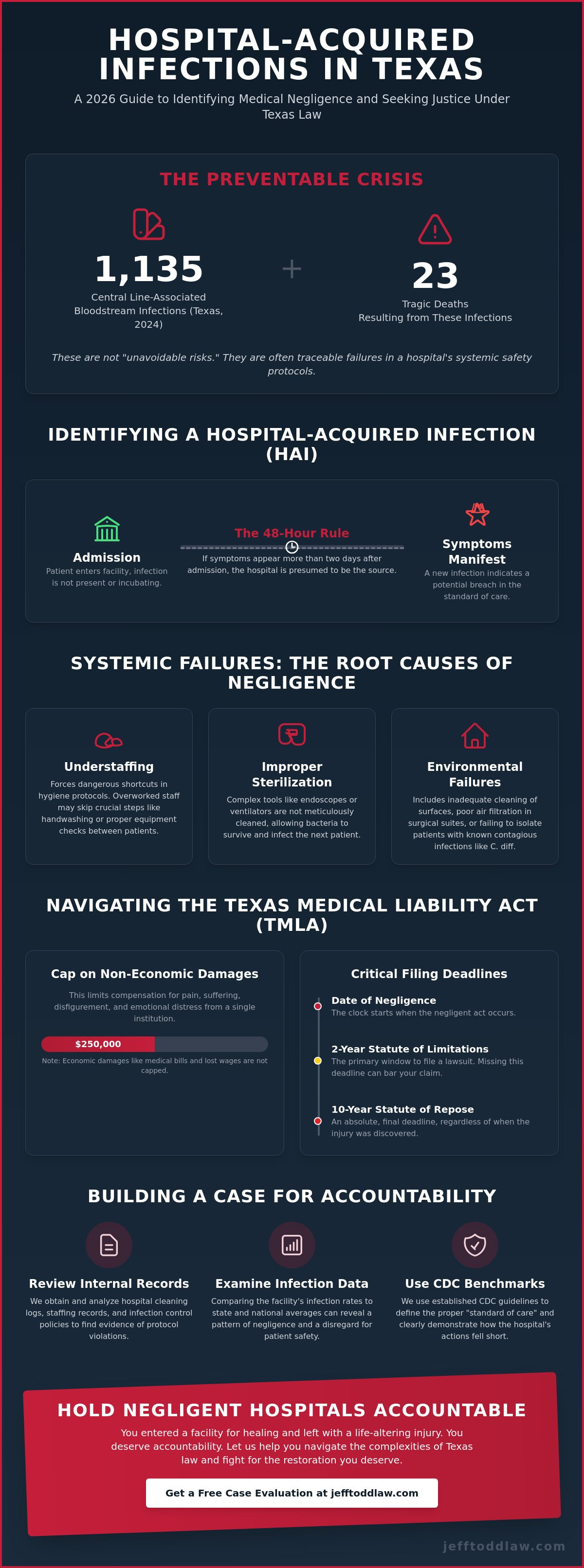
In 2024, Texas hospitals reported 1,135 central line-associated bloodstream infections, and 23 of those incidents tragically resulted in death. While healthcare providers often dismiss these complications as unavoidable risks, hospital acquired infection lawsuits frequently reveal that these injuries are actually traceable failures in systemic safety protocols. If you entered a facility for healing but left with a life-threatening condition you didn't have upon admission, you aren't just looking for a settlement. You're looking for accountability.
It's exhausting to face mounting medical debt and permanent physical damage while feeling ignored by hospital administration. You deserve to know if the standard of care was breached. This 2026 guide will show you how to identify medical negligence in hospital-acquired infections and the critical steps for seeking justice under Texas law. We will examine the state's specific filing process, the current $250,000 cap on non-economic damages for a single institution, and how to build a case that prioritizes your recovery over corporate interests. Understanding your rights is the first step toward the restoration you deserve.
Key Takeaways
- Understand the 48-hour admission rule that helps determine if your infection was contracted within the hospital environment.
- Recognize how systemic issues like understaffing in Texas hospitals often lead to the hygiene failures that cause MRSA and sepsis.
- Learn how the Texas Medical Liability Act governs hospital acquired infection lawsuits and what the $250,000 non-economic damage cap means for your claim.
- Identify the critical deadlines for filing your case, including the two-year statute of limitations and the absolute 10-year statute of repose.
- Gain insights into proving liability by reviewing internal hospital cleaning logs and infection rate data to hold negligent facilities accountable.
What Are Hospital Acquired Infection Lawsuits?
A hospital-acquired infection, or HAI, is more than a simple complication in your recovery. It is a specific medical event defined as an infection that was neither present nor incubating when you first entered the facility. Most clinical and legal standards rely on the 48-hour rule. If symptoms of a new infection manifest more than two days after your admission, the hospital environment is usually the primary source. Facilities have a strict legal obligation to maintain sterile environments and follow rigorous sanitation protocols to protect vulnerable patients. When these systems break down, hospital acquired infection lawsuits allow victims to seek accountability for the resulting physical and financial trauma.
While every medical procedure involves some level of risk, there is a sharp distinction between an unavoidable "side effect" and actionable medical negligence. Common infections such as Methicillin-resistant Staphylococcus aureus (MRSA), Clostridioides difficile (C. diff), and surgical site infections (SSIs) are frequently the result of traceable breaches in safety. Sepsis, which is a life-threatening systemic reaction, often occurs because a hospital failed to recognize or treat an initial infection promptly. These events represent a failure of the institution's duty to provide a safe space for healing.
The Legal Standard of Care in Texas Hospitals
Texas law requires healthcare providers to meet a specific benchmark known as the standard of care. This isn't an abstract concept; it is the baseline of what a competent, reasonably prudent hospital would do under similar circumstances. In Texas medical malpractice terms, the standard of care is defined as the level of care and skill that a reasonably prudent healthcare provider would have provided under the same or similar circumstances. If a facility deviates from established infection control protocols, they have failed their patients at a fundamental level.
When "Known Risks" Cross the Line into Negligence
Hospitals often defend themselves by arguing that infections are simply a "known risk" of modern medicine. However, a known risk does not excuse a provider's failure to follow basic safety measures. Negligence becomes clear when we identify "red flag" lapses in care. These include staff members failing to wash their hands between patient rooms, the use of improperly sterilized surgical instruments, or the neglect of post-operative wound care. We use CDC guidelines to establish whether a breach of duty occurred. When a hospital chooses to bypass these safety benchmarks to increase patient turnover or reduce costs, they are no longer managing a risk. They are creating a hazard. Successfully navigating hospital acquired infection lawsuits requires proving that these specific, preventable errors were the direct cause of your suffering.
Identifying the Root Causes of Hospital Negligence
Identifying the root cause of an injury is the cornerstone of successful hospital acquired infection lawsuits. These cases rarely involve a single, isolated mistake. Instead, they usually point toward systemic failures within the institution's management. In major medical hubs like Houston, chronic understaffing frequently forces healthcare workers to take dangerous shortcuts in hygiene. When a single nurse is responsible for too many patients, the time required for proper handwashing and equipment sterilization is often the first thing sacrificed to keep up with the workload.
Data from the CDC confirms that Healthcare-Associated Infections (HAIs) are largely preventable through strict adherence to evidence-based guidelines. Yet, we see cases where medical devices like endoscopes or ventilators are improperly reprocessed. These complex tools have small crevices that can harbor bacteria if they aren't cleaned with meticulous care. When a hospital prioritizes high patient volume over equipment safety, they're choosing profit over patient lives. This is a clear breach of the duty they owe to every person in their care.
Environmental and Protocol Failures
The physical environment of a hospital plays a massive role in patient safety. Negligence often manifests as inadequate cleaning of high-touch surfaces, such as bed rails, remote controls, and door handles. If a facility fails to isolate a patient with a known contagious infection like C. diff, they place every other person on that floor at risk. Even the air you breathe matters. In surgical suites, poor air filtration systems can allow pathogens to settle into open incisions during a procedure, turning a routine surgery into a fight for survival.
Diagnostic Negligence: Failure to Treat
Sometimes the negligence isn't that you caught the infection, but that the medical team failed to diagnose it. Nurses and doctors are trained to monitor vitals for the early warning signs of sepsis or localized redness. A delay in administering antibiotics by even a few hours can be the difference between a full recovery and permanent organ damage. This type of diagnostic failure is similar to the oversight we see when providers fail in recognizing every symptom of head injury, where missing a single clinical marker leads to a downward spiral. If you believe your condition worsened because your concerns were ignored, a medical malpractice attorney can help you investigate the hospital's internal records. Seeking justice isn't just about financial recovery; it's about ensuring these protocols are fixed so no other family suffers the same fate.
Case Study: Proving Liability in a MRSA Infection Claim
Imagine a patient in Austin undergoing a routine hip replacement. The surgery is successful, but 72 hours later, the patient develops a high fever and severe inflammation around the incision site. This scenario is the starting point for many hospital acquired infection lawsuits. To move from a medical complication to a legal claim, we must look behind the curtain of the hospital’s daily operations. We begin by auditing the facility’s internal cleaning logs and "infection rate" data for that specific surgical wing. If the records show that a room was "cleared" for a new patient in ten minutes when the manufacturer of the disinfectant requires a twenty-minute dwell time, we have found a traceable failure in systemic protocol.
Proving liability in these cases relies heavily on the "But For" test. We must demonstrate to a jury that "but for" the hospital’s specific lapse in sanitation or hygiene, the patient would not have contracted the life-threatening MRSA infection. We also work to quantify the total damage to the patient’s life. This isn't just about the initial illness. It includes the astronomical costs of "revision" surgeries to replace infected hardware and the physical toll of months spent on intensive, long-term antibiotic therapy. These economic damages are vital because they aren't subject to the same strict caps as "pain and suffering" awards in Texas.
Gathering the Evidence
The first step in building a case is obtaining the complete "certified" medical record. This prevents any after-the-fact alterations to the patient's history. We pay close attention to microbiology reports, which identify the specific strain of bacteria involved. To ensure the integrity of these findings, the legal team establishes a chain of custody by documenting every individual who handles the medical samples from the point of collection in the lab to their presentation in court. This meticulous attention to detail prevents the defense from questioning the validity of our evidence.
The Role of the Expert Witness
You cannot win a medical negligence case in Texas without the right testimony. We typically hire an infectious disease specialist to serve as an expert witness. These professionals are essential because they can distinguish between "community-acquired" MRSA, which you might catch at a gym, and "hospital-acquired" strains that thrive in clinical settings. By correlating the exact timing of the patient's symptoms with specific events during their hospital stay, the expert can provide the scientific link between the facility's negligence and the patient's injury. This testimony provides the steady, technical proof needed to hold large medical systems accountable.
Navigating the Texas Medical Liability Act (TMLA)
Texas is one of the most challenging states for medical malpractice litigation. The Texas Medical Liability Act (TMLA) established a series of procedural hurdles designed to limit the number of hospital acquired infection lawsuits that reach a jury. You generally have two years from the date the negligent act occurred to file your claim. However, Texas also enforces a 10-year statute of repose. This is an absolute deadline. No matter when you discovered the infection, you cannot file a lawsuit more than a decade after the event occurred. For those suing a government-owned hospital, the timeline is even tighter, often requiring a notice of claim within just six months.
The first formal step in this process is serving a "Notice of Health Care Claim" at least 60 days before filing your lawsuit. This letter alerts the providers to your intent to seek damages and must include a specific medical authorization form. If this form is incomplete or technically incorrect, the court can stay the proceedings, wasting valuable time. These strict requirements make it vital to have a legal partner who understands the intellectual rigor required to manage complex litigation in Texas.
The 120-Day Expert Report Rule
Under Chapter 74 of the TMLA, you have exactly 120 days from the date the defendant files an answer to serve a curriculum vitae and a detailed report from a qualified expert. This report must clearly define the standard of care, explain how the hospital breached it, and link that breach directly to your injury. If the court finds the report "deficient" or misses the deadline, the consequences are catastrophic. Your case will be dismissed with prejudice, and you may be forced to pay the hospital’s legal fees. The Todd Law Group, PLLC coordinates with elite medical experts to ensure every report meets these high standards before it reaches the court.
Damage Caps in Texas Medical Malpractice
Texas law imposes a strict $250,000 cap on non-economic damages against a single healthcare institution. This covers subjective losses like pain, suffering, and emotional distress. If multiple institutions are involved, the total cap is $500,000, but no single entity will ever pay more than $250,000 for non-economic losses. However, economic damages remain uncapped. These include your actual medical bills, future treatment costs, and lost earning capacity. For a deep dive on how these limits affect your specific situation, see our guide on Medical Malpractice Attorney Texas.
If you suspect a hospital’s failure led to your infection, don't wait for the statute of limitations to expire. Contact a medical malpractice lawyer today to begin the process of protecting your rights and securing your future.
Seeking Accountability: How a Houston Personal Injury Lawyer Can Help
Successfully managing hospital acquired infection lawsuits requires a legal partner who understands the intellectual rigor of both medicine and corporate defense. When you're facing a massive healthcare system, you aren't just fighting a hospital. You're fighting their sophisticated legal departments and multi-billion dollar insurance carriers. The Todd Law Group, PLLC brings a battle-tested background from elite corporate environments to the side of the individual. We view legal representation as a holistic path toward total restoration. This means we don't just see a case number; we see a person whose life has been upended by a preventable medical failure.
You should never have to choose between your health and your legal rights. We operate on a contingency fee model. This means you pay nothing unless we recover compensation for you. This structure allows you to access high-caliber legal experience without the burden of upfront costs. To prepare for your first consultation, we recommend gathering your discharge summaries, any lab results identifying the specific bacteria, and a clear timeline of when your symptoms first appeared. These documents provide the foundation for our initial investigation into the facility's protocols.
Holding Houston Hospitals Accountable
Houston is home to some of the most expansive medical complexes in the world. While these facilities offer advanced care, their administrative structures are often designed to minimize liability at all costs. Navigating the specific legal hurdles of Houston hospitals requires an attorney who knows how these systems operate from the inside. By holding these institutions accountable, your lawsuit does more than secure your financial future. It forces the facility to re-examine its hygiene standards, which can improve safety for every future patient. We manage the aggressive tactics of insurance adjusters so you can dedicate your energy to physical and emotional healing.
Your Road to Recovery Starts Here
Time is a critical factor in medical negligence cases. Evidence in hospital records can become harder to track as time passes, and staff members often transition to different facilities. Acting quickly ensures that your story is supported by preserved evidence and fresh testimony. If you're ready to seek justice, we invite you to reach out for a secure, private case evaluation. The Todd Law Group, PLLC is committed to providing a stable, supportive partnership that guides you through every step of the legal progression. We are personally invested in the local community and dedicated to ensuring that your voice is heard in the pursuit of accountability.
Take Your Path Toward Restoration Today
A hospital-acquired infection is more than a clinical complication; it is a profound disruption to your physical and financial stability. As we have explored, successfully navigating hospital acquired infection lawsuits requires a meticulous understanding of the 120-day expert report rule and the specific standard of care expected of Texas medical facilities. Whether your injury stemmed from systemic understaffing or a failure to diagnose sepsis, the law provides a pathway to hold these institutions accountable for their protocols. Securing your future means looking beyond the immediate medical crisis toward a long-term plan for total restoration.
Jeff Todd has been licensed to practice in Texas since 1994, bringing the intellectual rigor of a corporate legal background to personal advocacy. With local offices in Houston, Austin, and Galveston, The Todd Law Group, PLLC stands as a battle-tested partner for families across the state. We operate on a contingency basis, meaning you face no fee unless we win your case. Contact The Todd Law Group, PLLC today for a free, confidential evaluation of your hospital-acquired infection case. You deserve a legal team that treats you with the compassion you need and the professional authority your case demands.
Frequently Asked Questions
Can you sue for an infection acquired in a hospital in Texas?
Yes, you can sue if your infection was the direct result of medical negligence rather than an unavoidable risk. To succeed, you must prove the healthcare provider deviated from the accepted standard of care. This often involves identifying specific failures in sanitation or wound management. These cases fall under the category of hospital acquired infection lawsuits and require a detailed investigation into the facility's internal safety protocols.
How do you prove a hospital was responsible for an infection?
Proving responsibility requires a combination of medical records, internal hospital logs, and expert testimony. We look for evidence of systemic failures, such as inadequate sterilization of surgical tools or a failure to follow hand hygiene protocols. By comparing the timing of your symptoms with hospital events, an expert witness can establish a scientific link between the hospital's environment and your specific infection.
What is the average settlement for a hospital-acquired infection lawsuit?
The average medical malpractice payout in Texas was approximately $263,000 in 2025. Total payouts in the state reached $159.27 million in 2024, which was a 21.1% increase from the previous year. While these figures provide a baseline, the specific value of your recovery depends on your economic damages, such as medical expenses and lost earning capacity, which are not subject to the state's damage caps.
Is there a time limit to file a medical malpractice claim in Houston?
You generally have two years from the date the negligence occurred to file a claim in Houston. If you are pursuing a government-owned facility, you must often file a notice of claim within six months. Texas also enforces a 10-year statute of repose. This acts as an absolute deadline, meaning you cannot file a lawsuit more than a decade after the incident, regardless of when you discovered the injury.
What is considered a hospital-acquired infection according to the CDC?
The CDC defines a hospital-acquired infection as one that manifests 48 hours or more after hospital admission. These infections must not have been present or incubating at the time you entered the facility. Common examples include MRSA, C. diff, and catheter-associated urinary tract infections. Identifying these timelines is a critical step when preparing hospital acquired infection lawsuits to establish that the facility was the source of the pathogen.
Do I need an expert witness for an HAI lawsuit in Texas?
Yes, Texas law requires you to serve an expert report within 120 days of the defendant's answer. This report must be written by a qualified medical professional, such as an infectious disease specialist, who can define the standard of care and explain how it was breached. Failure to provide a sufficient report from a qualified expert will result in your case being dismissed and may require you to pay the hospital's legal fees.
What damages can I recover if I win my infection malpractice case?
You can recover both economic and non-economic damages. Economic damages include your past and future medical bills and lost earning capacity; these are not capped in Texas. Non-economic damages cover pain, suffering, and emotional distress. Under the Texas Medical Liability Act, non-economic damages are capped at $250,000 for a single healthcare institution and $500,000 if multiple institutions are found liable.
Can I sue if the hospital failed to diagnose my infection in time?
Yes, you can pursue a claim if a healthcare provider failed to diagnose or treat an infection in a timely manner. Diagnostic negligence occurs when a doctor or nurse ignores early warning signs, such as fever or localized redness, leading to severe complications like sepsis. In these instances, the negligence is not necessarily the infection itself, but the failure to provide the intervention required to prevent catastrophic physical damage.


