You spent years working hard to provide for your family, only to receive a medical diagnosis that changes everything. Now, you're facing mounting medical bills and a lingering suspicion that a past job site or a nearby facility is the cause. It's frustrating when you know something is wrong, but you're met with silence or denial from those responsible. Finding a dedicated chemical exposure attorney Texas residents can rely on is the first step toward uncovering the truth and holding negligent parties accountable for their actions.
It's an isolating experience to fight an illness while simultaneously battling insurance adjusters who try to minimize your pain. You shouldn't have to carry the burden of proof alone when your health and future are at stake. This guide will show you how to identify toxic exposure and navigate the hurdles of proving liability under statutes like the Texas Hazard Communication Act. We'll preview the legal strategies used to bridge the gap between medical science and the courtroom, ensuring you have the tools to pursue financial recovery and total restoration.
Key Takeaways
- Understand the three primary routes of toxic exposure and how they define the scope of your legal claim in Texas.
- Learn why the Houston Ship Channel and industrial zones present unique risks for premises liability and workplace injury cases.
- Find out how a skilled chemical exposure attorney Texas residents trust can apply the "Discovery Rule" to secure your right to compensation.
- Master the documentation process for physical symptoms and environmental factors to ensure your medical evidence meets strict legal standards.
- Gain insight into how a background in elite corporate law provides a distinct advantage when litigating against large chemical manufacturers.
Understanding Toxic Exposure Claims in Texas: What You Need to Know
Toxic torts represent a specialized and demanding niche within Texas personal injury law. These cases involve injuries or illnesses caused by exposure to hazardous substances, ranging from industrial solvents to environmental pollutants. Because these substances often cause damage that isn't immediately visible, Understanding Toxic Exposure Claims is vital for anyone seeking justice. If you've been harmed by a dangerous substance, working with a seasoned chemical exposure attorney Texas residents rely on can help you bridge the gap between complex medical data and the legal requirements for compensation.
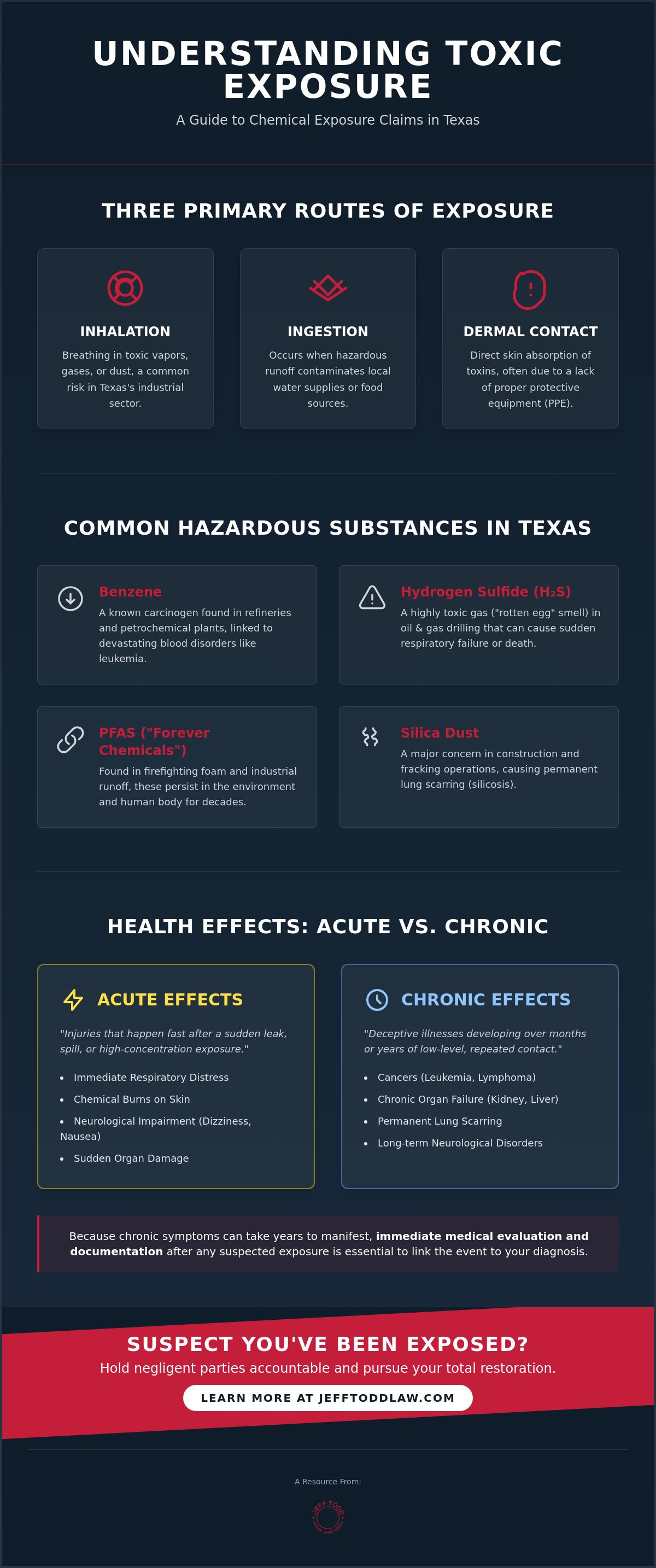
Chemicals typically enter the human body through three primary routes: inhalation, ingestion, or dermal contact. Inhalation is particularly common in the Texas industrial sector, where workers often breathe in toxic vapors, gases, or dust. Ingestion can occur when hazardous runoff contaminates local water supplies or food sources. Dermal contact involves the skin absorbing toxins directly, often due to a lack of proper personal protective equipment. Each of these routes requires a different approach to proving how and where the exposure occurred.
Common Hazardous Substances in the Texas Industrial Landscape
Texas is a global leader in energy and manufacturing, but this industrial strength comes with significant risks. Benzene is a frequent culprit in refineries and petrochemical plants; it's a known carcinogen that can lead to devastating blood disorders. In oil and gas drilling, Hydrogen Sulfide (H2S) is a constant threat. This "rotten egg" gas is highly toxic and can cause sudden respiratory failure or even death in high concentrations. We also see an increase in cases involving PFAS, the so-called "forever chemicals" found in firefighting foams and industrial runoff, which persist in the environment and the human body for decades. Silica dust remains a major concern in construction and fracking operations, where it can cause permanent lung scarring.
Acute vs. Chronic Health Effects
Injuries from chemical exposure generally fall into two categories based on the duration and intensity of the contact. Acute injuries happen fast. After a sudden leak or spill, you might experience immediate respiratory distress, chemical burns, or neurological impairment like dizziness and nausea. Chronic exposure is more deceptive. It occurs over months or years of low-level contact, often leading to life-altering illnesses like leukemia, non-Hodgkin lymphoma, or chronic organ failure. Because chronic symptoms can take years to manifest, immediate medical evaluation after any suspected exposure is essential. This documentation creates a vital link between the event and your diagnosis. A dedicated chemical exposure attorney Texas can then use this evidence to fight for your total restoration and hold negligent parties accountable.
Common Sources of Chemical Exposure in Houston and the Gulf Coast
The Houston Ship Channel serves as the industrial heart of the region, but its dense concentration of petrochemical facilities creates significant risks for workers and residents alike. Unlike other parts of the state that focus on agriculture, the Gulf Coast deals with a high volume of volatile organic compounds and heavy metals. When these substances escape containment, they don't just affect the immediate area; they can migrate through the air and water into surrounding neighborhoods. If you live or work near these industrial hubs, you're at a higher risk of encountering hazardous materials that can cause long-term health issues. Consulting with a chemical exposure attorney Texas residents rely on is often the only way to uncover the extent of a facility's negligence.
Industrial and Workplace Exposure Hotspots
Refineries and chemical manufacturing plants along the coast are primary sources of occupational illness. Workers in these environments often face exposure to toxic catalysts and cleaning solvents during routine maintenance or "turnaround" services. Construction sites also present hazards, especially when crews use industrial-grade adhesives and coatings in poorly ventilated spaces. If your employer doesn't carry traditional workers' compensation, a workplace injury lawyer can help you navigate a non-subscriber claim. These cases allow you to sue for full damages, but they require technical proof that the company failed to provide a safe environment or proper protective gear. While some focus on inland manufacturing, the dangers extend to the Gulf, where an oil rig leak or offshore platform failure can release concentrated toxins into the environment.
Environmental and Residential Contamination
Beyond the fence line of a plant, residential areas face their own set of challenges. Groundwater contamination from industrial runoff can seep into local wells, affecting entire communities before the problem is even detected. Air quality often plummets following plant explosions or localized leaks, leaving families with respiratory issues. For those in older Texas properties, hazards like lead-based paint or asbestos remain a constant threat. These situations often fall under premises liability law if a property owner knew about the toxins but failed to warn tenants or visitors. Proving that a specific property or facility caused your illness is a complex task that requires meticulous environmental testing and expert testimony.
Proving exactly how a chemical entered your system is a high legal bar to clear. The standard for Proving Liability and Causation in Texas has been tightened by recent court rulings, emphasizing that the "dose" of exposure must be scientifically linked to the injury. This is why working with an experienced chemical exposure attorney Texas can provide the intellectual rigor needed to challenge well-funded corporate legal teams. If you suspect your illness is tied to local industrial activity, you should contact a personal injury specialist to begin the process of documenting your exposure and securing your future restoration.
The Legal Challenges: Proving Liability and Causation in Texas
Proving that a specific chemical caused your illness is the most significant hurdle in a Texas toxic tort case. Corporations often have deep pockets and aggressive legal teams ready to deny any connection between their operations and your diagnosis. This is where a chemical exposure attorney Texas families trust becomes indispensable. You must establish "but-for" causation, which means proving your illness wouldn't have occurred but for the specific exposure event. This requires more than just a suspicious timeline; it demands rigorous scientific evidence that connects the toxic substance to your specific medical condition.
To overcome this challenge, we rely on a network of high-level expert witnesses. Toxicologists explain how a substance interacts with human biology at a cellular level, while epidemiologists provide data on disease patterns in exposed populations. These professionals translate complex data into clear evidence for a jury, showing how the "dose" you received was sufficient to cause harm. Without this expert testimony, even the most obvious connection can be dismissed in a court of law as mere coincidence.
Overcoming the Latency Period Defense
Many toxic injuries don't appear for years or even decades after the initial contact. Companies frequently use this "latency period" as a shield, claiming that too much time has passed to prove a link or that your lifestyle is actually to blame. We counter this defense by reconstructing your history through Safety Data Sheets (SDSs), employment logs, and medical records to create an undeniable timeline of exposure. The Texas Discovery Rule protects victims by ensuring the two-year statute of limitations only begins when you knew, or reasonably should have known, that your injury was caused by the exposure. This rule is a vital lifeline for those suffering from slowly developing conditions like cancer or organ failure.
Identifying All Responsible Parties
Liability isn't always limited to a single employer or property owner. If a defective storage tank leaked or a chemical was sold without proper warnings, you might have a product liability claim against the manufacturer. We also look for third-party liability, such as contractors who failed to follow safety protocols or equipment suppliers whose products failed under pressure. In many cases, a combination of premises liability and product defects creates a "perfect storm" of negligence. Holding these corporations accountable requires a meticulous investigation into systemic safety failures and a commitment to uncovering every party that contributed to your injury. We don't just look for the obvious culprit; we pursue every avenue to ensure your total restoration.
Steps to Take if You Suspect Chemical Poisoning or Long-Term Exposure
If you believe you've been exposed to hazardous substances, the actions you take in the first few days are critical to your health and your legal standing. Your immediate priority is seeking medical attention from a specialist familiar with toxic exposure, such as an occupational medicine physician or a toxicologist. Standard emergency room visits might miss the subtle markers of chemical poisoning that a specialist will know to look for. Diagnosing these conditions early can prevent a manageable issue from becoming a permanent disability. Once you've addressed your physical safety, reaching out to a chemical exposure attorney Texas families trust will ensure your rights are protected from the start.
Documentation is your most powerful tool in the early stages of a claim. You should record every detail of the exposure event or the environment where you suspect toxins are present. Note specific dates, times, and any unusual smells or physical sensations you experienced. If you're a worker, you have a legal right to obtain Safety Data Sheets (SDS) for every chemical in your workspace. These documents provide the scientific foundation for your case, detailing the known risks and proper handling procedures for the substances involved. A houston personal injury lawyer can help you use these records to build a compelling narrative of negligence.
Building Your Medical and Evidence Trail
Proving exposure requires objective data. Request comprehensive blood tests and diagnostic imaging as soon as possible, as some toxins leave the bloodstream quickly even if the damage they cause is permanent. Keeping a daily symptom diary is also essential; track your energy levels, respiratory function, and any skin irritations to show the progression of your condition over time. In some cases, securing physical evidence like contaminated clothing or soil samples from a suspected leak site can provide the "smoking gun" needed for your claim. Ensure these items are stored in sealed containers to prevent cross-contamination.
What to Avoid When Dealing with Corporate Legal Teams
Corporate investigators and insurance adjusters often move quickly to mitigate their company's liability. You should never give a recorded statement or sign a "medical release" without having your lawyer review it first. These releases are often overly broad, allowing the company to dig through years of unrelated medical history to find "pre-existing conditions" they can blame for your current symptoms. Similarly, be wary of "quick settlements" offered shortly after a spill or leak. These offers are designed to close your case before the full extent of a long-term illness, like cancer or organ damage, becomes apparent. Companies often use internal investigations as a tool to shift blame onto the victim, claiming you failed to use provided safety equipment correctly.
Protecting your future requires a proactive and meticulous approach to evidence. If you're ready to hold a negligent party accountable for your injuries, you should schedule a case evaluation with a chemical exposure attorney Texas who understands how to fight back against corporate defense tactics.
Why The Todd Law Group, PLLC is the Right Choice for Your Texas Chemical Case
Choosing the right legal partner is the most critical decision you'll make after a toxic injury. Large chemical corporations employ elite defense teams designed to shield them from accountability and minimize your suffering. To level the playing field, you need a chemical exposure attorney Texas residents can trust to bring the same level of intellectual rigor and strategic depth to your side of the table. At The Todd Law Group, PLLC, we don't just process cases; we build comprehensive strategies that anticipate the tactics of well-funded defendants. Our primary goal is your total restoration, both financially and physically.
Elite Advocacy Grounded in Experience
Attorney Jeff Todd brings over 30 years of experience to every case he handles in the Texas legal system. His career trajectory includes significant time in elite corporate legal environments, giving him an "insider’s view" of how major firms defend themselves against high-stakes claims. This background is particularly valuable in complex medical malpractice and wrongful death suits where scientific data and corporate protocols are under intense scrutiny. Jeff Todd applies high-impact corporate rigor to individual advocacy, ensuring that no detail is overlooked in your pursuit of justice. Whether your case involves a single catastrophic event or decades of chronic exposure, our firm has the battle-tested experience to see it through to a successful resolution.
We understand that the financial strain of a long-term illness can be overwhelming for any family. That’s why The Todd Law Group, PLLC operates on a contingency fee model. You won't face any upfront costs or hourly legal bills while we fight your case. We only receive a fee if we successfully win your case or secure a settlement on your behalf. This approach aligns our interests with yours and ensures that high-quality legal representation is accessible to everyone, regardless of their current financial situation. With offices in Houston, Austin, and Galveston, we provide a personalized, local touch backed by the resources of a premier Texas firm.
Your Road to Total Recovery
Our commitment to your well-being extends far beyond the final settlement check. We view every personal injury claim as a step toward a holistic healing process rather than just a financial transaction. This means we take on the heavy logistical burden of your case, managing everything from evidence collection to communication with aggressive insurance adjusters, so you can focus entirely on your medical treatment. We believe that legal representation should be a stable partnership that supports your transition back to health and stability. If you're ready to take the next step toward your restoration, we're here to guide you through the complexities of the Texas legal system with quiet confidence and dedicated advocacy.
Contact The Todd Law Group, PLLC for a Free Chemical Exposure Case Evaluation to begin your journey toward justice and financial recovery.
Secure Your Future Restoration and Legal Rights
Recovering from a toxic illness requires more than just medical treatment; it demands a legal strategy that can dismantle complex corporate defenses. We've explored how identifying exposure sources and utilizing the Texas "discovery rule" can protect your right to pursue compensation even years after an event. Partnering with a chemical exposure attorney Texas residents trust ensures you have the intellectual rigor and local experience needed to bridge the gap between science and justice. Whether your injury stems from the Houston Ship Channel or a defective industrial product, your focus should remain on healing while we handle the logistical burden of your claim.
The Todd Law Group, PLLC has been licensed in Texas since 1994, offering a stable partnership for those in distress. With offices in Houston, Austin, and Galveston, we are personally invested in the communities we serve. We operate on a contingency-based fee model, meaning there is no recovery and no fee for you. You don't have to navigate this complex system alone. Schedule Your Free Consultation with The Todd Law Group, PLLC Today to begin your path toward total restoration. You deserve a dedicated partner who prioritizes your health and your future.
Frequently Asked Questions
Is there a time limit to file a chemical exposure lawsuit in Texas?
In Texas, the statute of limitations for personal injury claims is generally two years from the date the injury occurred or was discovered. This "discovery rule" is essential for toxic exposure cases because illnesses like cancer often take years to manifest. If you wait too long after a diagnosis, you may lose your right to seek justice. Consult a chemical exposure attorney Texas families rely on to ensure your filing meets these strict deadlines.
Can I sue my employer for toxic exposure if they have workers’ compensation?
If your employer carries workers' compensation, it's typically the exclusive remedy for workplace injuries. However, you may still have a case if the employer’s gross negligence caused a fatality or if a third party, like an equipment manufacturer, was responsible. If your employer is a "non-subscriber" and does not carry workers' comp, you can sue them directly for full damages. An experienced attorney can evaluate your specific situation to identify all available legal avenues.
What kind of compensation can I recover in a Texas toxic tort case?
You can recover compensation for both economic and non-economic damages. This includes reimbursement for past and future medical expenses, lost wages, and loss of earning capacity. You may also seek damages for physical pain, mental anguish, and permanent impairment. In cases involving extreme negligence, a jury might award punitive damages to punish the responsible party. These funds are vital for your long-term healing and financial stability.
How do I prove that a specific chemical caused my cancer or illness?
Proving causation requires a combination of medical records and expert testimony. Specialists like toxicologists and epidemiologists must link your specific illness to the chemical "dose" you received. We use Safety Data Sheets and employment records to establish a timeline of exposure. This scientific approach bridges the gap between your diagnosis and the defendant's actions, making it harder for corporate legal teams to deny responsibility for your condition.
What should I do if I was exposed to chemicals at a neighbor’s property or a public place?
Exposure on a neighbor's property or in a public place often falls under premises liability law. You must show that the property owner knew or should have known about the hazardous condition but failed to warn you. If you suspect exposure, document the location and any visible signs of contamination immediately. Seeking a legal evaluation from a chemical exposure attorney Texas can help you determine if a property owner’s negligence caused your injuries.
Do I need a lawyer if the company has already offered me a settlement?
You should always have an attorney review any settlement offer before you sign. Insurance adjusters often offer quick, low settlements to resolve a claim before the full extent of your illness is known. Once you sign a release, you cannot ask for more money if your condition worsens. A lawyer ensures the settlement covers your long-term medical needs and reflects the true value of your suffering and loss.
Can I file a wrongful death claim if a family member died from chemical exposure?
Yes, surviving family members can file a wrongful death claim if a loved one died due to toxic exposure. In Texas, spouses, children, and parents have two years from the date of death to bring a lawsuit. These claims seek to recover funeral expenses, lost financial support, and the loss of companionship. While no amount of money can replace a family member, this process provides accountability and essential financial support for survivors.
What are the most common chemicals involved in Texas refinery lawsuits?
Texas refinery lawsuits frequently involve substances like Benzene, which is a known carcinogen found in petrochemical plants. Hydrogen Sulfide (H2S) is another common threat, often encountered during drilling and refining operations. Other hazardous materials include Silica dust from fracking and PFAS "forever chemicals" used in industrial firefighting foams. Each of these chemicals has specific safety standards, and failing to meet them often serves as the foundation for a negligence claim.


