
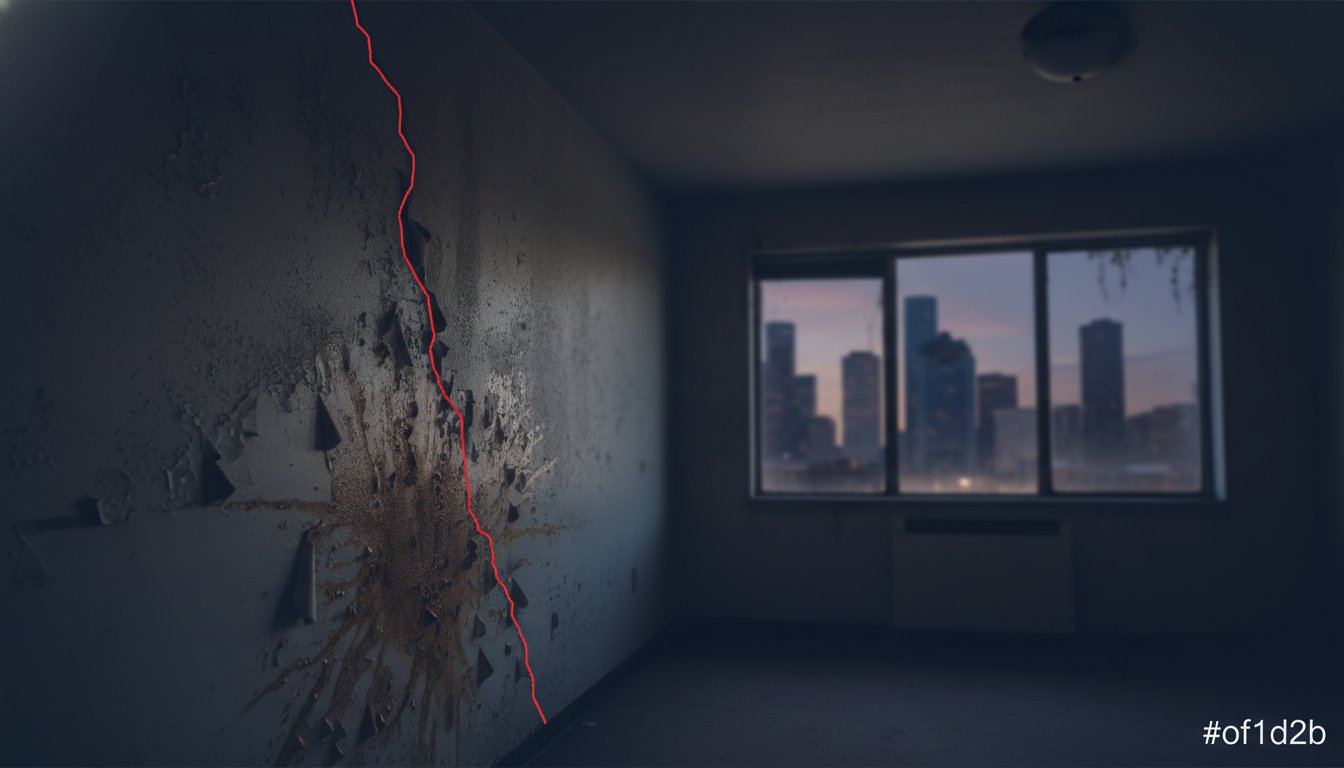
You submitted the repair request weeks ago, yet the broken floorboard or leaking ceiling remained ignored until the moment you were injured. Now, you're dealing with the physical aftermath of an accident while facing mounting medical bills and a management company that refuses to take responsibility. If a property owner's failure to maintain safe conditions has caused you harm, suing a landlord for negligence in Houston is a necessary step toward your restoration.
It's a common, frustrating reality for many tenants who feel powerless against large property owners. You shouldn't have to carry the financial and physical burden of someone else's oversight. We understand the strain this puts on your life, and we're here to help you regain your footing through steady, experienced advocacy.
This guide details the specific legal requirements for proving negligence under the Texas Property Code. We'll explore how to document your claim, what evidence you need to succeed, and how you can secure the compensation necessary to cover your medical expenses and property damage.
Key Takeaways
- Understand how the Texas Property Code defines the "Warranty of Habitability" and what specific property failures constitute legal negligence.
- Identify the four essential pillars required for successfully suing a landlord for negligence in Houston to ensure your claim is legally sound.
- Learn to recognize common hazardous scenarios, such as untreated toxic mold or structural defects, that often justify a premises liability claim.
- Discover the critical steps for documenting your injuries and the mandatory "Notice to Repair" process required under state law.
- Explore how a dedicated legal partner can help you navigate the complex recovery process through a "No Win, No Fee" model.
What Qualifies as Landlord Negligence in Houston?
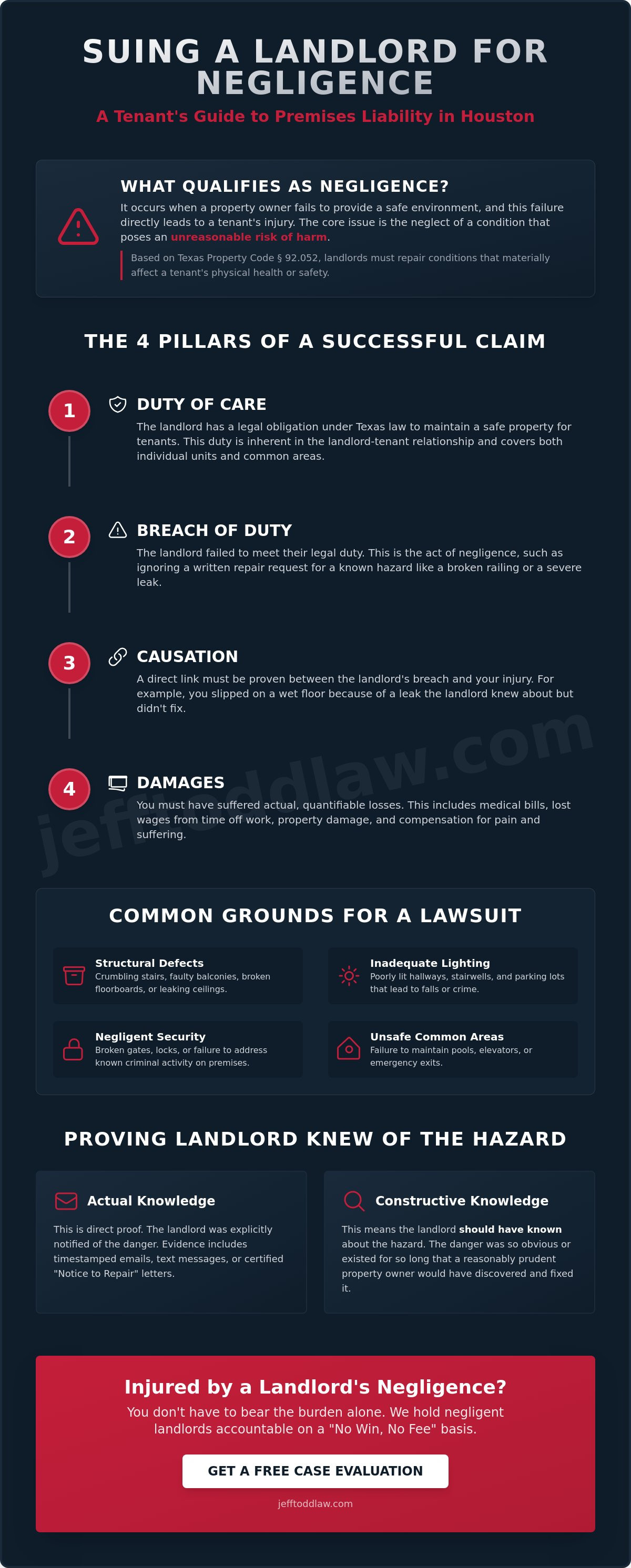
Landlord negligence occurs when a property owner or management company fails to exercise reasonable care to maintain a safe environment, leading to a tenant's injury. While a minor leak or a chipped cabinet might be a breach of contract, it doesn't always rise to the level of negligence. For the purposes of suing a landlord for negligence in Houston, the focus is on hazards that create a genuine risk to your physical health or safety. This distinction is critical because it moves the case from a simple rental dispute into the territory of premises liability.
The foundation for these claims is often found in the Texas Property Code § 92.052, which outlines the "Warranty of Habitability." This statute mandates that landlords make a diligent effort to repair conditions that materially affect the physical health or safety of an ordinary tenant. This requirement is a cornerstone of Landlord-tenant law, ensuring that those who pay for a dwelling aren't subjected to dangerous living conditions. In Houston, local building codes add even more layers of responsibility, particularly regarding structural integrity and fire safety in high-density apartment complexes.
The Legal Duty of a Houston Landlord
A landlord's duty isn't limited to the space within your four walls. It extends across the entire property. Owners are legally required to maintain common areas such as parking lots, stairwells, and elevators to prevent foreseeable accidents. Their responsibilities include:
- Ensuring all emergency exits are functional and unobstructed.
- Providing adequate lighting in hallways and parking structures to deter crime and prevent falls.
- Maintaining structural elements like balconies and railings to prevent collapses.
- Securing the premises against unauthorized entry if the area has a history of criminal activity.
When a Hazard Becomes a Lawsuit
In Texas, a successful claim must prove that a condition posed an "unreasonable risk of harm." This means the danger wasn't something obvious that a tenant should have easily avoided, but rather a hidden or ignored hazard. Timing is also vital. Under state law, a landlord typically has seven days to respond to a written repair request before their inaction is viewed as legally significant. If you've signed a standard Houston Apartment Association (HAA) lease, you might see clauses that attempt to limit the landlord's liability. However, these private contracts cannot override your fundamental rights under the Texas Property Code when a landlord's blatant disregard for safety leads to a serious injury. Suing a landlord for negligence in Houston requires showing they knew about the danger and chose to do nothing.
Proving Liability: The 4 Pillars of Your Claim
Winning a personal injury claim hinges on more than just a landlord's poor attitude. It requires a structured legal argument that meets the specific burden of proof required by Texas courts. When suing a landlord for negligence in Houston, your case must stand on four foundational pillars. If any of these elements are missing, even a clear hazard may not result in a successful recovery. We focus on building a case that is both technically sound and emotionally resonant.
The first pillar is Duty. We must establish that the landlord had a legal obligation to protect you from harm. Under the framework of Texas Renter's Rights, this duty is inherent in the rental relationship. Property owners are legally bound to maintain a safe environment. The second pillar is Breach. This occurs when the landlord fails to meet their duty by acting, or failing to act, in a way that a "reasonably prudent" person would. Ignoring a crumbling staircase or a faulty electrical panel is a clear breach of that duty.
The third pillar is Causation. You must prove that the landlord's specific inaction was the direct cause of your injury. If you fell because of a loose floorboard they refused to fix, the connection is direct. Finally, we must prove Damages. Suing a landlord for negligence in Houston requires quantifying your losses. This includes your medical bills, the wages you lost while recovering, and the physical pain you've endured. Without documented damages, there is no financial recovery to pursue.
Establishing 'Actual or Constructive' Knowledge
Proving the landlord was aware of the hazard is often the most difficult part of a trial. We look for "actual knowledge," such as a timestamped email or a certified letter you sent. If you don't have a paper trail, we pivot to "constructive knowledge." This means the hazard existed for such a long time that any competent management company should have discovered and repaired it. Maintenance logs, previous tenant complaints, and internal inspection reports are often the evidence needed to prove a landlord was looking the other way while your safety was at risk.
The Role of Foreseeability in Houston Cases
Foreseeability asks a simple question: Was your injury a predictable result of the neglected repair? In our local courts, this is a major factor in negligent security claims. If a Houston apartment complex has a documented history of criminal activity but the owner fails to maintain gate locks or lighting, a subsequent assault may be viewed as a foreseeable event. This specialized area of premises liability law is the bedrock of your claim for recovery. If you feel your concerns were ignored, it's time to speak with a dedicated advocate who understands how to hold these companies accountable.
Common Scenarios for Suing a Houston Landlord
Negligence isn't a vague concept; it's a physical reality that often leaves lasting scars. In Houston's sprawling apartment complexes and rental homes, certain hazards appear more frequently than others. Identifying these patterns is the first step toward building a successful claim for compensation. Suing a landlord for negligence in Houston often begins with a single, preventable failure that cascades into a life-altering event. Whether it's a structural defect or a failure to provide basic security, these incidents aren't just accidents—they're legal breaches.
Premises Liability and Slip and Fall Injuries
Houston's climate creates unique risks that property owners frequently ignore. Leaking AC units in high-humidity months can create slick, invisible puddles on tile floors in common areas. Crumbling concrete on walkways or loose handrails on second-story balconies are common sights in aging properties across the city. When these hazards lead to an accident, our slip and fall lawyers look beyond the immediate injury. We calculate long-term medical costs, including physical therapy and potential future surgeries. Landlords often try to use the "open and obvious" defense, suggesting you should've seen the danger. We counter this by proving the landlord had ample time to fix the issue but chose to prioritize profits over tenant safety.
Beyond falls, structural failures like ceiling cave-ins or balcony collapses represent catastrophic breaches of duty. In cases of significant property neglect, a landlord's negligence may also involve toxic mold exposure. Houston's humidity makes unaddressed water leaks a breeding ground for respiratory issues and chronic illness. Similarly, fire injuries often stem from faulty wiring or a failure to provide working smoke detectors, both of which are clear violations of local safety ordinances and the Texas Property Code.
Negligent Security and Tenant Assaults
Safety isn't just about the physical structure; it's about the security of the environment. If a landlord fails to repair a broken perimeter gate or ignores burnt-out lighting in a parking garage, they may be liable for crimes committed against tenants on the property. To succeed in a negligent security claim, we must show the crime was foreseeable. If the complex has a documented history of similar incidents and the management company did nothing to improve security measures, they've failed in their duty. Corporate property managers often cut costs on security personnel or equipment, but they don't have the right to do so at the expense of your physical safety. Suing a landlord for negligence in Houston provides a path to hold these entities accountable for their choices and ensures you aren't left to heal alone.
The Legal Process: From Notice to Settlement
Suing a landlord for negligence in Houston is a multi-step journey that requires both legal precision and patience. It isn't enough to simply point to a hazard; you must follow a specific procedural path to ensure your claim survives the scrutiny of a courtroom. This process moves through distinct phases, beginning with formal notification and potentially ending in a jury trial in Harris County. Each stage is designed to build a factual record that proves the property owner failed in their duty to keep you safe. We guide our clients through this progression with the goal of achieving total restoration.
The Critical 'Notice' Requirement Under Texas Law
The most common reason tenant injury cases are dismissed is a failure to provide proper notice. In Texas, a verbal complaint, a text message, or an entry in a digital resident portal is often insufficient to trigger a landlord's legal liability. To successfully pursue a claim, you must send a formal "Notice to Repair" via certified mail, return receipt requested. This creates an undeniable paper trail that the landlord was aware of the hazard. Under the Texas Property Code, a landlord typically has seven days to respond to this notice before their inaction is legally classified as a failure to repair. If you've been injured, proving that you provided this specific type of notice is the linchpin of your case.
Documenting Your Injuries and Losses
Evidence is the bedrock of any premises liability claim. Immediately following an accident, you should take high-resolution photos of the defect that caused your injury before the landlord has a chance to fix it. This "before" evidence is vital. You should also seek a medical evaluation immediately, even if your injuries seem minor at first. Medical records provide the objective proof needed to link your physical pain directly to the property's condition. While you're gathering this information, it's vital that you don't give recorded statements to the landlord's insurance company. Their goal is to minimize their payout, not to help you heal. They'll often use your own words to suggest the accident was your fault.
Once the foundation is laid, the litigation process moves into more complex territory:
- Filing the Lawsuit: We initiate formal proceedings in Harris County Civil Court to bring the landlord into the legal arena.
- Discovery and Depositions: This is the phase where we demand internal maintenance logs and take sworn testimony from property managers.
- Expert Testimony: We often employ engineers or safety experts to testify about how the property failed to meet Houston building codes.
- Resolution: Most cases are resolved through a negotiated settlement, but we're always prepared to take your case to trial to secure the maximum recovery.
If you're ready to hold a negligent property owner accountable, it's time to contact our team for a professional evaluation of your claim.
How The Todd Law Group, PLLC Holds Negligent Landlords Accountable
When you decide that suing a landlord for negligence in Houston is the only way to secure justice, you need a legal partner who isn't intimidated by the scale of your opponent. Many tenants feel powerless when facing large property management firms that have deep pockets and aggressive legal teams. At The Todd Law Group, PLLC, we level the playing field. We bring the intellectual rigor of a sophisticated corporate legal background to the service of individuals who've been cast aside by negligent owners. Our goal isn't just a financial settlement; it's your total restoration.
We believe that your access to justice shouldn't be limited by your current financial situation. This is why we operate on a "No Win, No Fee" contingency model. You pay nothing upfront for our services. We take on the financial risk of the litigation, covering the costs of investigators and experts, so you can focus entirely on your physical and emotional healing. We only collect a fee if we successfully recover compensation for you. This approach ensures that our interests are perfectly aligned with your recovery.
Success in these cases requires more than just knowing the law; it requires a history of battle-tested experience. Suing a landlord for negligence in Houston is a serious undertaking, and Jeff Todd leverages over 30 years of litigation experience to navigate the complexities of Harris County courts. Having handled high-stakes matters across major metropolitan legal hubs, he understands the tactics corporate defendants use to delay or deny claims. We use this insight to stay three steps ahead, ensuring your case moves forward with momentum and meticulous attention to detail.
Aggressive Advocacy for Houston Tenants
Our investigation process is exhaustive. We don't just look at the accident itself; we dig into the property’s history to find documented patterns of negligence. If a landlord has a history of ignored repair requests or building code violations, we find it. We collaborate with structural engineers to prove property defects and medical professionals to illustrate the long-term impact of your injuries. This comprehensive approach is how we secure maximum compensation for personal injury victims who've been betrayed by those responsible for their safety.
Contact Us for a Free Case Evaluation
Taking the first step can feel daunting, but you don't have to walk this path alone. During your initial consultation, we'll listen to your story, review your evidence, and provide a clear, honest assessment of your legal options. We also prioritize your peace of mind by helping you understand your protections against landlord retaliation. Under Texas law, you have the right to seek justice without fear of illegal eviction or harassment. We're personally invested in the Houston community and are ready to serve as your stable partner through every phase of the legal process.
Schedule your free consultation with The Todd Law Group, PLLC today and let us begin the work of securing the recovery you deserve.
Securing Your Future After a Property Injury
Your home should be a place of safety, not a source of physical pain and financial stress. We've explored how identifying a breach of duty and strictly following the "Notice to Repair" requirements are the essential first steps toward justice. Whether you've suffered a fall due to structural neglect or an injury from a security failure, the path to recovery involves holding property owners accountable for their inaction.
Suing a landlord for negligence in Houston requires a meticulous legal strategy and the intellectual rigor of an experienced advocate. With over 30 years of legal experience in Texas, our firm is dedicated to the total restoration of our neighbors in the Houston community. We operate on a contingency basis; it's simple: no recovery, no fee. You don't have to navigate this complex legal landscape alone while trying to heal.
Start your path to recovery with a free consultation. We are ready to stand as your steady partner and fight for the compensation and healing you deserve.
Frequently Asked Questions
Can I sue my landlord if I was injured in a common area like a pool or gym?
Yes, you can pursue a claim if the injury occurred in a common area like a pool, gym, or parking lot. Property owners are responsible for ensuring these shared spaces are free from "unreasonable risks of harm." If a broken pool gate or a malfunctioning gym machine caused your injury, it falls under premises liability law. We investigate these areas to prove the landlord failed to conduct regular safety inspections.
What if I can't afford a lawyer to sue my landlord in Houston?
You can afford legal representation through our contingency-based model. This means you pay nothing out of pocket to begin suing a landlord for negligence in Houston. We only collect a fee if we successfully recover compensation for your medical bills and losses. This system ensures every tenant has access to high-caliber advocacy regardless of their current financial situation or the size of the management company.
How long do I have to file a negligence lawsuit against my landlord in Texas?
In Texas, you generally have two years from the date of the injury to file a personal injury lawsuit. This is a strict deadline known as the statute of limitations. Failing to file within this window usually means you lose your right to seek legal recovery forever. It's vital to begin gathering evidence and consulting with a professional as soon as possible after the incident to preserve your rights.
Can my landlord evict me for filing a lawsuit for negligence?
Your landlord cannot legally evict you for exercising your right to file a negligence claim. The Texas Property Code specifically prohibits landlords from retaliating against tenants who request repairs or pursue legal remedies. If a landlord attempts to terminate your lease, increase your rent, or decrease services after you file, they may face additional legal penalties for their retaliatory actions.
What kind of damages can I recover in a landlord negligence case?
You can recover both economic and non-economic damages. Economic damages cover your tangible losses, such as hospital bills, rehabilitation costs, and lost income from missed work. Non-economic damages address the intangible impact of the injury. This includes physical pain, mental anguish, and any permanent impairment or scarring caused by the landlord's failure to maintain a safe environment for you and your family.
Does renter's insurance cover injuries caused by landlord negligence?
Renter's insurance typically covers your personal belongings and your own liability if someone is injured inside your unit. It doesn't cover injuries caused by the landlord's failure to maintain the building's structure or common areas. In these cases, we pursue a claim against the landlord's commercial liability insurance policy. This is the primary source of the funds needed for your medical recovery and restoration.
What if the landlord claims the hazard was 'open and obvious'?
A landlord may argue the danger was "open and obvious" to avoid liability, but this isn't an automatic win for them. Texas uses a proportionate responsibility system. Even if you were partially at fault for not seeing the hazard, you may still recover damages as long as the landlord's negligence was the primary cause of the accident. We focus on proving the landlord's superior knowledge of the defect.
Do I need a lawyer if the landlord's insurance company offered me a settlement?
You should consult a lawyer before accepting any offer from an insurance company. Initial settlement offers are often significantly lower than the true value of your claim. An experienced advocate can evaluate the full extent of your long-term medical needs and ensure you don't sign away your rights for a fraction of what you deserve. We handle the negotiations so you can focus on healing.


