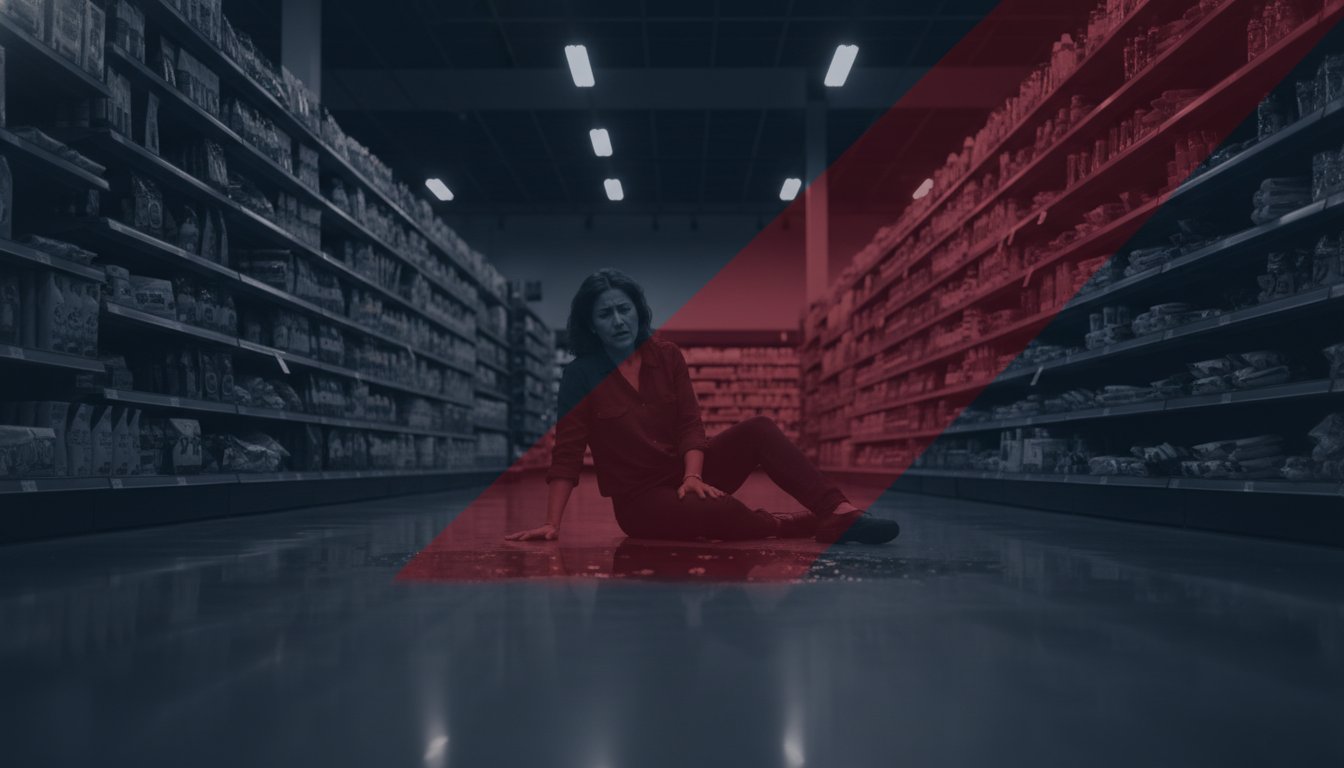
You’ve likely shopped at H-E-B your entire life, but the moment you slip on a hazard and feel that sharp pain in your hip or back, the relationship changes instantly. While H-E-B is a Texas institution, their claims process is a corporate machine specifically designed to minimize what they pay you. You might find that the store manager who was initially helpful has suddenly gone silent, leaving you to handle mounting medical bills and physical limitations on your own. Partnering with a sophisticated H-E-B slip and fall attorney is often the only way to move from being a victim of a corporate process to achieving total restoration.
It's natural to feel anxious about taking legal action against a brand you’ve supported for years, but your health shouldn't be the price of their negligence. I promise to help you navigate the complex legal hurdles, including the strict temporal evidence requirements reaffirmed by the Texas Supreme Court in April 2026. This guide previews the essential steps for documenting your injury, understanding H-E-B’s self-insured status, and building a case that forces the company to take your recovery seriously.
Key Takeaways
- Understand your legal standing as an "invitee" and why this status requires H-E-B to maintain a safe environment for your shopping experience.
- Identify the three critical elements of proof needed to overcome the high evidentiary burden placed on victims in Texas premises liability cases.
- Learn the specific legal steps required to prevent H-E-B from recycling surveillance footage that could serve as vital evidence for your claim.
- Discover how to look beyond immediate medical bills to calculate the true impact of long-term injuries on your future earning capacity and quality of life.
- Explore how a seasoned H-E-B slip and fall attorney transitions your case from a corporate transaction into a process of holistic healing and financial recovery.
Understanding Your Rights After an H-E-B Slip and Fall Accident
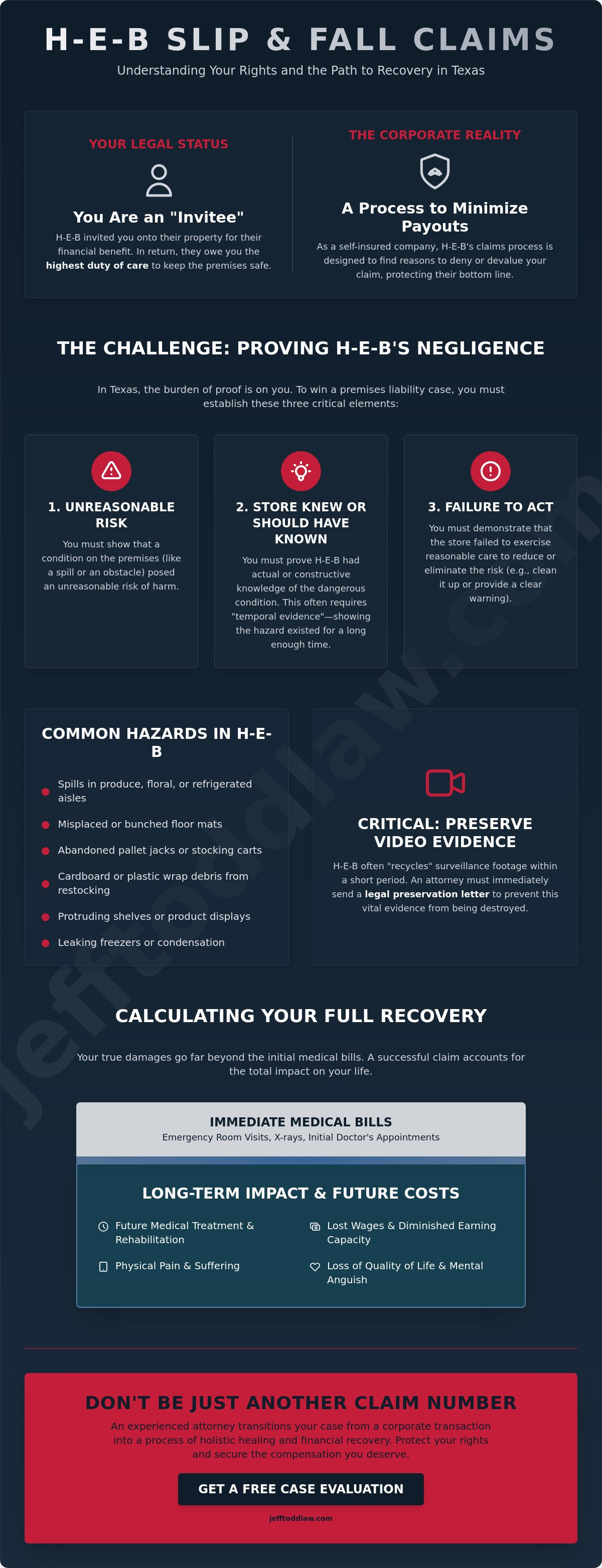
When you step through the sliding doors of an H-E-B, you aren't just a customer; you're an "invitee." This specific legal classification is the cornerstone of premises liability in Texas. It means the store invited you onto the property for their commercial benefit, and in exchange, they owe you the highest level of protection under the law. This duty requires the store to actively inspect the premises for dangerous conditions and either repair them or provide a clear warning to shoppers.
A common misconception among injured Texans is that the store is automatically liable for any fall that happens on its property. This isn't how the law works. Simply falling doesn't guarantee a recovery. Under the Texas 51% bar rule, you can only recover damages if you're found to be 50% or less at fault for the accident. Because H-E-B is a self-insured entity, their internal adjusters often use these rules to deny claims early in the process. Consulting with an H-E-B slip and fall attorney helps you establish the necessary evidence to bridge the gap between a painful accident and a successful legal claim.
The Duty of Care at Texas Retailers
H-E-B's legal obligation is defined by "reasonable care." This isn't an absolute guarantee of your safety, but rather a commitment to act as a prudent business owner would. For example, if another shopper drops a jar of pickles and you slip on it seconds later, the store might not be liable because they didn't have a reasonable amount of time to discover the mess. However, if the hazard existed for an extended period without being addressed, the store has likely breached its duty. This relationship is strictly governed by premises liability law, which requires a strategic approach to prove the store's knowledge of the danger.
Common Hazards in Grocery Environments
Grocery stores are dynamic environments where hazards can appear in an instant. High-risk areas often include the produce and floral departments, where water from misting systems or leaky vases frequently pools on the floor. In the frozen food and refrigerated aisles, compressor leaks or simple condensation can create slick spots that are nearly impossible to see. Beyond liquids, non-liquid hazards are equally dangerous. You might encounter:
- Misplaced or bunched-up floor mats at the entrance.
- Abandoned pallet jacks or stocking carts in high-traffic aisles.
- Cardboard debris or plastic wrap left on the floor during restocking.
- Protruding displays that catch a shopper's foot.
Each of these hazards triggers different legal requirements for proof. A liquid spill typically requires "temporal evidence" to show how long it was there, a standard reaffirmed by the Texas Supreme Court in April 2026. Conversely, a structural hazard like a broken shelf might suggest a more permanent failure in maintenance. An H-E-B slip and fall attorney will analyze these specifics to ensure your claim reflects the reality of the store's negligence and your right to total restoration.
The Challenges of Proving Liability in Texas Grocery Store Injury Claims
Proving negligence against a self-insured retail giant like H-E-B is a significant legal undertaking. Unlike some other types of personal injury cases, the burden of proof in a slip and fall claim rests entirely on your shoulders. You must demonstrate that the store failed in its duty of care, which requires more than just showing you were injured on their property. While the previous section established your status as an invitee, the actual process of proving negligence under the Texas Civil Practice and Remedies Code requires a meticulous collection of evidence.
To win a premises liability case in Texas, your H-E-B slip and fall attorney must prove three specific elements. First, you must show that a condition on the premises posed an unreasonable risk of harm. Second, you must prove the store knew or should have known about this condition. Finally, you must demonstrate that the store failed to exercise reasonable care to reduce or eliminate that risk. If any of these elements are missing, your claim will likely be denied by H-E-B’s internal risk management team.
Actual vs. Constructive Notice
The most difficult hurdle in any Texas grocery store claim is proving "notice." Actual notice occurs when an employee specifically saw the hazard or, in some cases, created it themselves by over-waxing a floor or stacking a display poorly. Constructive notice is more common and much harder to prove. It requires showing that the hazard existed for such a long time that the store should have discovered it through a reasonable inspection. The temporal evidence standard mentioned earlier means that without a specific timestamp or visual cue, such as track marks through a spill, proving constructive notice becomes an uphill battle.
The Store’s Defense Tactics
H-E-B often employs the "Open and Obvious" defense, arguing that the hazard was so clearly visible that any reasonable person would have avoided it. They may also present "sweep logs" or electronic records showing that an employee inspected the aisle just minutes before your fall. These records are used to prove they were being proactive, even if the hazard was missed. High-impact houston personal injury lawyer strategies involve cross-referencing these logs with surveillance footage to see if those inspections actually happened.
Texas also follows a modified comparative fault rule. If an adjuster can convince a jury that you were 51% responsible for your fall, perhaps because you were looking at your phone, you lose the right to recover any compensation. If you're feeling overwhelmed by these corporate tactics, reaching out to a professional who understands these nuances at The Todd Law Group, PLLC can provide the clarity you need to protect your future recovery. An H-E-B slip and fall attorney knows how to dismantle these defenses by focusing on the store's internal safety policies and the physical reality of the incident scene.
Critical Steps to Preserve Evidence Before H-E-B "Recycles" Video Footage
Time is your greatest enemy after a grocery store injury. Most large retailers, including H-E-B, operate on a digital surveillance loop that automatically overwrites old footage. While specific retention policies aren't always public, the industry standard for grocery stores is to retain video for only 30 to 90 days. If you don't act within this window, the visual proof of the hazard that caused your fall could vanish forever. A verbal request to a store manager to "save the tape" has no legal weight and won't stop this automated process. To protect your rights, you need a formal legal intervention to halt the destruction of evidence.
The National Safety Council notes that falls are a leading cause of preventable injuries, yet proving them requires specific, preserved data. An H-E-B slip and fall attorney acts as your advocate by immediately initiating a professional investigation. This proactive approach ensures that the "corporate machine" doesn't simply wait out the clock until your evidence is recycled. Beyond video, your legal team will look for witness statements and the names of employees who were on duty, as these individuals often provide the most honest accounts of store conditions before corporate lawyers get involved.
The Spoliation Letter: Your Most Important Legal Tool
A spoliation letter is a formal notice sent to H-E-B demanding they preserve all evidence related to your incident. It's vital to send this via certified mail to create a verifiable paper trail. This letter should demand more than just the video of the fall itself. It must include requests for:
- Surveillance footage from the hour preceding the fall to establish "notice."
- Electronic sweep logs and manual cleaning records.
- Personnel files for the employees responsible for that specific aisle.
- Internal communications or incident reports filed by store staff.
If the store deletes the video after receiving this letter, your attorney can argue "spoliation of evidence." This can lead to a legal presumption that the destroyed evidence would have been unfavorable to the store, significantly strengthening your position in court.
What to Document at the Scene
While H-E-B reportedly has an unofficial policy against filming inside their stores, you should still attempt to document the scene as thoroughly as possible before leaving. Follow the 360-degree photo rule. Capture the hazard from multiple angles, the floor surrounding it, and the lack of any yellow warning cones or "wet floor" signs. If you're physically able, identify the "Store Lead" or manager on duty rather than just entry-level employees. These supervisors are often the ones responsible for safety protocols and will be key figures in future depositions. Always request a copy of the Incident Report before you walk out the door, as these documents are often "lost" or altered later in the claims process.
Calculating the Full Value of Your Recovery: Beyond Medical Bills
A full financial recovery is about more than just clearing your current medical debt; it's about securing your future quality of life. An experienced H-E-B slip and fall attorney will look past the immediate invoices to build a case for total restoration. In Texas, damages are generally split into two categories: economic and non-economic. While economic damages cover quantifiable losses like hospital bills and lost wages, non-economic damages address the human cost of the injury, such as physical impairment and emotional distress.
One of the most critical phases of your case is the evaluation of Maximum Medical Improvement (MMI). This is the point where your condition has stabilized and further treatment is unlikely to result in significant improvement. Settling your claim before reaching MMI is a dangerous gamble. If you accept a "quick check" from an H-E-B adjuster before your doctors fully understand the long-term impact of a traumatic brain injury or spinal damage, you lose the right to ask for more money later. Statistics show that while minor injuries might settle for under $25,000, cases requiring surgery can reach settlements exceeding $750,000. Rushing the process only benefits the store's bottom line.
Hidden Costs of a Slip and Fall
The true cost of a fall often surfaces months after the incident. You may require extensive physical therapy, modifications to your home for mobility, or future surgeries that haven't been scheduled yet. These are "invisible" damages that corporate adjusters often ignore. We apply the same intellectual rigor found in a medical malpractice attorney texas case to catastrophic falls, ensuring that every future need is documented. This includes calculating lost future earning capacity if your injuries prevent you from returning to your previous career.
Dealing with Insurance Adjusters
H-E-B is self-insured, which means their adjusters are company employees whose primary goal is to protect the brand's capital. They may ask for a "recorded statement" early on, hoping you'll say something that implies you were distracted or at fault. Another common tactic is the "Medical Authorization" trap. This is a document that grants them access to your entire medical history, allowing them to claim your current pain is actually a "pre-existing condition."
You have no legal obligation to provide these statements or blanket authorizations without legal counsel present. Redirecting all corporate communication to your H-E-B slip and fall attorney prevents these predatory tactics from devaluing your claim. If you're ready to move beyond corporate stalls and focus on your recovery, contact us today for a professional review of your claim. We handle the logistical burden so you can focus entirely on your physical and emotional healing.
How The Todd Law Group, PLLC Advocates for Your Holistic Restoration
Choosing an H-E-B slip and fall attorney is about more than finding someone to file paperwork. You need a partner who understands the intellectual rigor required to challenge a self-insured corporation. Jeff Todd’s prestigious professional history, detailing a career trajectory across major metropolitan legal hubs, provides the foundation for this firm’s unique approach. He has transitioned from representing major interests in elite corporate environments to advocating for the total restoration of individuals in our local community. This background allows our firm to match the resources of a retail giant with a sophisticated, battle-tested strategy.
We believe that access to high-caliber legal representation shouldn't depend on your current financial situation. We operate on a contingency fee model. This means you won't face any upfront costs or hourly fees. Our firm’s geographic reach extends across Houston, Austin, and Galveston, providing a stable presence for Texans whose lives have been disrupted by a grocery store injury. We're personally invested in ensuring that the legal process serves as a stable bridge to your recovery rather than an additional source of anxiety. By removing the financial barrier to entry, we allow you to focus on your physical progression while we manage the legal complexities.
A Sophisticated Approach to Premises Liability
Our firm doesn't view your injury as a simple transaction. Instead, we frame legal representation as a holistic healing process. This involves addressing the logistical and emotional needs that arise after a catastrophic fall. Having a battle-tested advocate means you aren't just a claim number; you're a person who deserves a dedicated and committed persona in your corner. We apply the same level of detail to your premises liability case that Jeff Todd once applied to massive corporate disputes. This intellectual rigor is essential when dismantling the defensive tactics used by H-E-B’s internal risk management teams, such as the strategic use of sweep logs or the misapplication of the open and obvious defense.
Next Steps: Your Free Case Evaluation
During your first consultation, we'll conduct a deep dive into the facts of your incident. We'll discuss your legal standing and the specific evidence needed to meet the strict standards for temporal evidence reaffirmed in 2026. Our team takes a proactive stance, handling every aspect of the communication with H-E-B’s adjusters immediately to prevent you from falling into common traps like the medical authorization release. This goal-oriented rhythm ensures your case moves with momentum and meticulous attention to detail. If you're ready to move toward a full recovery, Contact The Todd Law Group, PLLC to begin your path to recovery today. We're here to handle the legal weight so you can focus on your physical restoration.
Secure Your Future Recovery Today
Navigating a claim against a self-insured retail giant requires more than just a report of your injury. You must act quickly to secure surveillance footage before the recycling loop closes and gather the specific temporal evidence required by the latest Texas Supreme Court rulings. Partnering with a dedicated H-E-B slip and fall attorney provides the intellectual rigor and corporate-level strategy needed to hold these retailers accountable for their negligence.
Jeff Todd has been licensed to practice in Texas since 1994. He brings decades of experience in both high-stakes corporate litigation and personal injury advocacy to your case. Our firm operates on a contingency-based model; you pay no fee unless we win your case. This ensures that your focus remains on physical and emotional healing while we manage the complex legal machinery and store communications. Schedule Your Free H-E-B Injury Consultation with Jeff Todd to begin your journey toward holistic restoration. You don't have to face this corporate process alone, and your path to a full recovery starts with a single proactive step.
Frequently Asked Questions
How much is an H-E-B slip and fall case worth in Texas?
The value of your claim depends entirely on the severity of your injuries and the store's level of negligence. While average settlements in Texas typically range from $15,000 to $85,000, cases involving surgery or permanent impairment can reach $750,000 or more. An H-E-B slip and fall attorney will evaluate your medical bills, lost future earnings, and non-economic damages to determine the true value of your restoration.
What if H-E-B offers me a settlement before I hire a lawyer?
You should be extremely cautious because early offers from self-insured companies are often designed to minimize their financial exposure. These "quick checks" rarely cover the long-term costs of physical therapy or future medical needs that haven't surfaced yet. Accepting a settlement now requires you to sign a release that prevents you from ever seeking additional compensation for this specific injury.
How long do I have to file a slip and fall lawsuit against H-E-B?
Texas law generally provides a two-year statute of limitations from the date of the incident to file a personal injury lawsuit. This deadline is established by the Texas Civil Practice and Remedies Code § 16.003. If you fail to file within this window, you lose your legal right to recover damages. Starting the process early is vital for preserving evidence like surveillance footage before it's overwritten.
Can I sue H-E-B if I slipped on a wet floor but there were no signs?
Yes, you can sue because H-E-B has a legal duty to warn invitees of known hazards or conditions they should have discovered. However, simply proving there was no sign isn't enough to win. Under the April 2026 Texas Supreme Court ruling in H-E-B, L.P. v. Marissa Peterson, you must also provide temporal evidence showing the hazard existed long enough for the store to reasonably find it.
What happens if I was partially at fault for my fall at H-E-B?
Texas follows a "51% bar rule" for modified comparative negligence. You can still recover compensation as long as you are 50% or less responsible for the accident. Your final settlement will be reduced by your percentage of fault. For example, if you are found 20% at fault for being distracted, you would receive 80% of the total damages awarded. If you are 51% at fault, you recover nothing.
Does H-E-B have a "secret" policy for handling injury claims?
H-E-B uses a sophisticated internal risk management department because they are a self-insured company. This means they don't use a traditional insurance carrier; instead, they pay claims out of their own corporate capital. Their internal policies often include a "no filming" rule for customers and a rapid-response team designed to gather evidence that favors the store's defense. A seasoned attorney knows how to counter these corporate strategies.
What should I do if the store manager refuses to give me an incident report?
You should document the refusal and then create your own record of the event immediately. While stores aren't legally required to hand over internal reports to customers on the spot, an attorney can obtain these documents later through a formal legal request. Take photos of the hazard, get the names of any witnesses, and seek medical attention to establish a professional record of your injuries.
Is it worth hiring an attorney for a minor injury at a grocery store?
It is often worth it because what seems like a minor injury can develop into a chronic condition requiring expensive long-term care. An H-E-B slip and fall attorney can identify hidden costs and ensure that the store's adjusters don't pressure you into a settlement that fails to cover your future needs. Professional representation ensures your case is handled with the intellectual rigor necessary to achieve total restoration.


